

Seychelles Military Power Ranking 2026

Seychelles ranks 177th in the 2026 Military Power Rankings. Its defense model is built around maritime security, EEZ protection, counter-piracy, internal stability, and regional cooperation rather than conventional land warfare.
The Seychelles Defence Force are small, but the country's western Indian Ocean location gives it an important role in maritime surveillance, anti-trafficking operations, port security, and partner-supported counter-piracy coordination.
MPR Overview
Seychelles' defense strengths lie in its EEZ protection mandate, anti-piracy experience, and regional strategic partnerships. The Seychelles Coast Guard is the most active component of the defense structure and is responsible for patrols, maritime law enforcement, fisheries protection, and anti-smuggling operations.
Seychelles does not possess the size, manpower, air power, heavy ground equipment, or strategic depth associated with higher-ranked militaries. Its MPR position reflects a small but functional defense force optimized for island security, maritime domain awareness, and partner-supported operations.
Strategic Geography Schematic
- Victoria
- command
- Indian Ocean
- EEZ patrol
- shipping lanes
- coast guard
- partner surveillance
- counter-piracy
- anti-trafficking route
- Maritime patrol route
- Partner surveillance link
- Capital command node
Core MPR Strengths
Maritime Security and EEZ Defense
The Seychelles Coast Guard conducts routine patrols over a vast EEZ of roughly 1.4 million square kilometers, focusing on illegal fishing, narcotics trafficking, and piracy deterrence.
Counter-Piracy Experience
Seychelles became a regional counter-piracy hub during the height of Somali piracy, supporting maritime patrols, legal processing, and security coordination in the Indian Ocean.
International Defense Cooperation
Seychelles receives defense assistance from India, France, the United States, the UAE, and European partners, including patrol vessels, surveillance support, training, and maritime-security programs.
Civil Defense and Disaster Relief
The SDF assists in natural disaster response, island evacuation, and emergency logistics, particularly during cyclone seasons and flooding events.
Seychelles’ defense strengths lie in its EEZ protection mandate, anti-piracy experience, and regional strategic partnerships.
Operates interceptor boats, patrol vessels, and radar systems, many of which were donated or financed by partners like India, UAE, and EU agencies.
Seychelles has been a regional leader in counter-piracy missions since the height of Somali piracy in the 2010s, operating as a legal and logistical hub for regional anti-piracy operations.
Hosts joint maritime drills and contributes personnel to Indian Ocean maritime surveillance platforms.
Receives substantial defense assistance from India (patrol vessels, surveillance aircraft, naval training), France (technical support through its Indian Ocean territories), and U.S. AFRICOM (anti-trafficking programs).
Participates in Exercise Cutlass Express, a U.S.-sponsored maritime security exercise.
MPR Doctrine and Strategy
Seychelles follows a maritime-security doctrine focused on EEZ protection, patrol operations, counter-piracy, port security, anti-trafficking missions, and partner-supported surveillance. Its defense posture is not built around conventional battlefield maneuver or offensive operations.
The country's small land area and dispersed island geography make maritime domain awareness central to national security. Patrol vessels, radar systems, coastal security, and foreign training partnerships are more important to Seychelles than armor, artillery, or combat aircraft.
Strategically, Seychelles seeks to remain useful to regional and international security partners while preserving sovereignty over its waters, ports, fisheries, and island infrastructure.
Force Profile
The Seychelles Defence Force are small and focused on national security, maritime policing, island defense, and civil support. The Coast Guard is the most strategically relevant branch because of Seychelles' large EEZ and exposure to Indian Ocean maritime threats.
The force has limited manpower and limited independent combat endurance, but it benefits from partner training, donated platforms, and experience in maritime-security operations.
Ground Forces
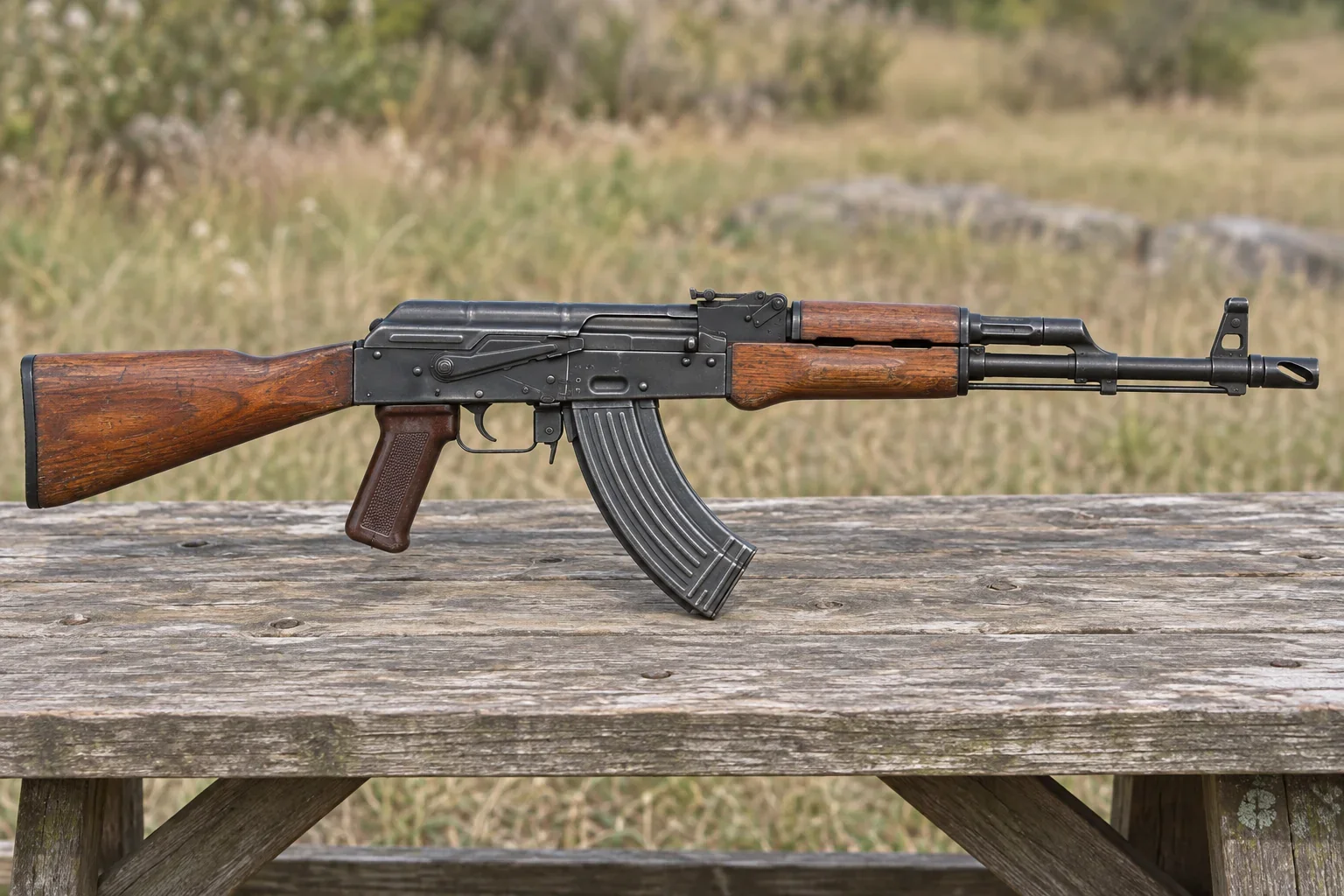
Seychelles has no heavy ground force. Its land component is designed for internal security, defense of key sites, public-order support, and coordination with civil authorities rather than high-intensity ground warfare.
The absence of tanks, artillery, heavy armor, and large infantry formations prevents Seychelles from sustaining a conventional ground campaign. Its ground posture is local, defensive, and infrastructure-focused.
Air Power
Seychelles does not operate a formal combat air force, but it maintains a small air wing for maritime surveillance, transport, liaison, and support missions.
| Aircraft type | Dated listed inventory | Role and scope |
|---|---|---|
| DHC-6 Twin Otter | 1 active, November 2025 | Directory MPA; surveillance, transport and rescue |
| Dornier 228 | 2 active, November 2025 | Directory SAR; surveillance, transport and rescue |
The air wing supports maritime domain awareness and civil security but does not provide air superiority, strike power, or independent air defense.
Seychelles maintains an Air Force for maritime surveillance, transport, search and rescue, and evacuation. Its official inventory and the November 2025 FlightGlobal directory list one DHC-6 and two Dornier 228 aircraft; these are not combat jets.
Aircraft counts are the Active-column holdings in FlightGlobal’s November 2025 World Air Forces 2026 directory, cross-checked against the official service description. Blank order cells do not mean zero orders; the listing does not measure airworthiness, sortie generation or ready crews.
Naval Forces
Seychelles’ navy, operated by the Coast Guard, focuses on maritime security and anti-piracy operations. The navy’s primary responsibility is safeguarding Seychelles’ extensive territorial waters and EEZ, which includes rich fishing grounds and shipping lanes.
Interceptor boats, patrol vessels, and radar systems give Seychelles a limited but meaningful maritime-security capacity. Many systems have been donated or financed by partners including India, the UAE, and European agencies.
The Coast Guard is not designed for naval warfare against a major power. It lacks submarines, frigates, missile corvettes, naval aviation, and strategic sea-control assets.
MPR 2025 assessment: Merchant Marine Fleet: Small.
MPR 2025 assessment: Naval Replenishment Capability: Basic coastal and offshore support capability.
Missile Systems
Seychelles does not possess advanced missile systems or nuclear capabilities. The country’s defense efforts are focused on maritime security and maintaining internal stability rather than power projection.
Its missile-related inventory is limited to small arms and naval patrol craft weapons. Seychelles has no ballistic missiles, cruise missiles, anti-ship missile batteries, or long-range air-defense systems.
Detailed Missile Inventory
| System Category | Status | Operational Role | MPR Assessment |
|---|---|---|---|
| Ballistic missiles | None | Not applicable | No strategic missile capability |
| Cruise missiles | None | Not applicable | No long-range precision-strike capability |
| Anti-ship missiles | None | Not applicable | No coastal missile-defense or sea-denial missile force |
| Surface-to-air missiles | None reported | Not applicable | No national air-defense missile network |
| Patrol craft weapons | Limited | Maritime policing and interdiction | Useful for law enforcement but not strategic deterrence |
Nuclear and Strategic Deterrence
Seychelles is a non-nuclear state and has no nuclear weapons program, strategic missile force, or long-range delivery systems.
Its deterrence model is based on sovereignty, regional partnerships, maritime awareness, international law enforcement cooperation, and the strategic value of its location in the Indian Ocean.
Cyber, Space, ISR, and Electronic Warfare
Seychelles has no military satellite inventory and no independent military space program. Its intelligence, surveillance, and reconnaissance capability is focused on maritime domain awareness, radar coverage, port security, and partner-supported information sharing.
Maritime radar, coastal surveillance, patrol aircraft, port monitoring, and partner-provided intelligence are the most important ISR elements in Seychelles' security system.
MPR 2025 assessment: Major Military Airports: Seychelles International Airport (dual-use with Coast Guard aviation).
Partnerships and Alliances
Seychelles has strong defense partnerships with regional and international allies, particularly India, France, and the United States. These relationships support maritime surveillance, coast guard development, counter-piracy, anti-trafficking programs, and training.
India
India has provided patrol vessels, training, surveillance support, and defense cooperation to strengthen Seychelles' maritime capabilities and Indian Ocean security role.
France
France provides technical and regional support through its Indian Ocean presence and broader defense relationships in the region.
United States
The United States supports counter-piracy, maritime surveillance, anti-trafficking programs, and regional exercises such as Exercise Cutlass Express.
European and Regional Partners
European agencies and regional maritime-security frameworks support patrol capacity, legal coordination, counter-piracy operations, and Indian Ocean maritime awareness.
Seychelles has strong defense partnerships with regional and international allies, particularly India and the United States. India has provided patrol vessels and training to help Seychelles strengthen its maritime capabilities. The United States also provides support in counter-piracy operations and maritime surveillance, making Seychelles an important regional partner in maintaining security in the Indian Ocean.
Combat History
Seychelles has not fought a modern interstate war. Its military history includes the 1977 coup, resistance to an armed mercenary attack in 1981, force reorganization and armed counter-piracy operations. Internal stability, maritime security and foreign partnerships have shaped its military development.
| Conflict or Operation | Period | Military Significance |
|---|---|---|
| Coup and internal security legacy | 1977-1980s | Seychelles experienced a coup in 1977 and later attempted coups, including the 1981 mercenary-led coup attempt. This period shaped the creation of a national defense force focused on regime stability and internal security. |
| Post-Cold War professionalization | 1990s-2000s | The SDF evolved into a coastal-defense and civil-support institution, with professionalization supported by partners including India, France, and African Union observers. |
| Counter-piracy leadership | 2008-2015 | During the rise of Somali piracy, Seychelles became a frontline anti-piracy state, supporting joint maritime patrols, prosecutions, and surveillance cooperation with EUNAVFOR and the U.S. Navy. |
| Ongoing multinational exercises | 2010s-present | The SDF participates in exercises including Cutlass Express, India-Seychelles naval exchanges, and African maritime-security forums. |
Seychelles combines modest conventional capability with practical maritime-security experience. Its counter-piracy record includes kinetic engagements, while its wider posture remains defensive and partner-supported.
Coup and Internal Security Legacy (1977–1980s)
In 1977, Seychelles underwent a coup led by France-Albert René, with support from a paramilitary force. During the 1980s, the country experienced attempted coups, including the mercenary-led 1981 Seychelles coup attempt by foreign agents. This period led to the formation of a national defense force focused on regime stability and loyalty to the government.
Post-Cold War Professionalization
The SDF evolved into a coastal defense and civil support institution, reducing political entanglement and professionalizing under guidance from India, France, and African Union observers.
Counter-Piracy Leadership (2008–2015)
During the rise of Somali piracy, Seychelles became a frontline anti-piracy state, conducting joint maritime patrols, accepting pirate prosecutions, and developing advanced maritime surveillance systems in cooperation with the EU Naval Force (EUNAVFOR) and U.S. Navy.
Exercises and maritime security
Multinational drills and partner cooperation support maritime law enforcement and disaster response. They complement actual armed rescues rather than making the entire operational record non-combat.
Armed rescue and maritime specialization
On 29 March 2010, the Coast Guard vessel Topaz pursued a hijacked vessel carrying Seychellois and Iranian hostages. According to the Presidency, an EU maritime-patrol aircraft assisted the search; Topaz disabled the dhow with gunfire and rescued the people who entered the sea. The official account also reported incoming rocket-propelled-grenade fire. This was an armed counter-piracy operation, not an interstate campaign, and illustrates the combination of local crews, political command, partner surveillance and limited naval firepower that shaped Seychelles’ maritime doctrine.
Evolution of military aviation
The official Air Force history traces an agriculture-and-fisheries Air Wing to 1978, transfer into the defense structure in 1985, subsequent reorganization as a Coast Guard-linked wing, and the Seychelles Air Force designation in 2011. These institutional changes explain why a small patrol-and-rescue service should not be described as an absence of an air force. The current official aircraft description agrees with the dated directory on one Twin Otter and two Dornier 228s; it does not establish fighter capability or daily availability.
Geography, Economy, and Infrastructure
Seychelles has a tropical marine climate, with humid and warm conditions and two distinct monsoon seasons. Its terrain includes rocky islands, narrow coastal plains, central hills, and coral atolls.
The country's small land area contrasts with its large maritime zone. This creates a security model where patrol coverage, port access, radar, maritime law enforcement, and partner support are central to defense planning.
Natural resources include fish, coconuts, salt, and marine biodiversity. Seychelles has no proven oil or natural gas reserves and relies on imported petroleum products.
MPR 2025 assessment: Climate: Tropical marine; humid and warm with two distinct monsoon seasons.
MPR 2025 assessment: Terrain: Rocky, narrow coastal plains with central hills and coral atolls.
MPR 2025 assessment: Natural Resources: Fish, coconuts, salt, marine biodiversity.
National Metrics
| Metric | Estimate or Status |
|---|---|
| Capital | Victoria |
| Founding date | June 29, 1976, independence from the United Kingdom |
| System of government | Unitary presidential republic |
| Defense budget | US$28.38 million (SIPRI 2025; excluding military pensions) |
| Defense budget as percentage of GDP | 1.24% (SIPRI 2025; excluding military pensions) |
| GDP at purchasing-power parity | Approximately $3.3 billion USD (MPR 2025 assessment) |
| GDP per capita at purchasing-power parity | Approximately $33,000 USD (MPR 2025 assessment) |
| External debt | Approximately $800 million USD (MPR 2025 assessment) |
| Military expenditure trend | Stable, with slight increases for maritime domain awareness and coast guard operations (MPR 2025 assessment) |
| Airports | Approximately 14, including airstrips and heliports |
| Roadways | Approximately 500 km |
| Railway network | None |
SIPRI’s current-dollar series (US$millions): 2021: 36.59; 2022: 23.45; 2023: 29.28; 2024: 27.63; 2025: 28.38. The 2025 figure is excluding military pensions. Changes in this nominal-dollar series are distinct from the retained MPR assessment of spending priorities.
Military Infrastructure and Readiness
Major military and security locations include Victoria, Perseverance Island, and Praslin. Seychelles International Airport serves as a dual-use facility supporting Coast Guard aviation and maritime surveillance.
Naval infrastructure includes Seychelles Coast Guard headquarters at Ile Perseverance and patrol-vessel support bases. Naval replenishment capability is basic and oriented toward coastal and offshore patrol craft rather than sustained naval deployments.
Readiness is strongest in maritime patrol, search and rescue, anti-piracy coordination, port security, and partner-supported operations. It is weakest in conventional combat, air defense, heavy ground warfare, and strategic logistics.
MPR 2025 assessment: Major Military Districts / Commands: Seychelles Defence Forces (SDF), including Coast Guard and Infantry Unit.
MPR 2025 assessment: Missile Inventory Highlights: None; small arms and naval patrol craft weapons only.
MPR 2025 assessment: Defense Alliances: Bilateral defense cooperation with India, France, and the U.S.
Defense Industry
Seychelles has no domestic defense-industrial base. It does not produce military aircraft, armored vehicles, missiles, naval combatants, air-defense systems, or advanced sensors.
High-end capabilities, from radar coverage to aircraft maintenance, are supported by foreign partners. This gives Seychelles functional maritime security capacity but limits independent wartime endurance.
MPR 2025 assessment: Proven Oil Reserves: None.
MPR 2025 assessment: Proven Natural Gas Reserves: None.
MPR 2025 assessment: Oil Production: None.
MPR 2025 assessment: Military Installations (Domestic): Victoria, Perseverance Island, Praslin.
MPR 2025 assessment: Military Installations (Overseas): None.
MPR 2025 assessment: Foreign Military Personnel Presence: Occasional Indian and U.S. naval visits and training teams.
Why Seychelles Ranks 177th
Very Small Force and Minimal Combat Capabilities
The IISS 2025 comparison lists 420 active military personnel. This small establishment concentrates on island security and maritime surveillance, with no tanks, major artillery force or large ground formations; separate current service strengths are not established by that total.
No Fighter Force or Strategic Deterrence Systems
Seychelles has a small Air Force with surveillance, transport and rescue aircraft, but no fighter force, strategic air defense or independent strategic strike capability. The official inventory and dated directory do not support the inherited helicopter claims.
Dependence on External Training and Logistics
The force has limited experience of modern interstate warfare, but its 1981 defense against mercenaries and armed counter-piracy rescues are real operational experience. Neither exercises nor law-enforcement priorities make that entire record non-combat.
No Ground Defense-in-Depth
The force is structured around island-specific deployments and maritime security. It lacks the mobilization depth, sustained ground-defense structure and independent logistics needed to resist a major conventional invasion.
Seychelles maintains a small but strategically positioned defense force tailored for maritime security, law enforcement, and regional cooperation.
Its MPR ranking reflects low military size, limited heavy equipment, no strategic deterrence, and no independent power-projection capacity.
At the same time, its role in Indian Ocean security, counter-piracy, EEZ protection, and multinational maritime cooperation gives it practical relevance beyond its small force size.
MPR Tools and Comparisons
Related Country Profiles
Ranking Navigation
War Simulations
Use the MPR War Simulator to compare Seychelles with another military using MPR rankings, force structure, doctrine, geography, maritime exposure, partner support, strategic depth, and scenario-specific conditions.
Research Trail
This country profile draws on military personnel estimates, maritime-security reporting, government information, regional security history, economic data, geographic indicators, defense publications, and the Military Power Rankings analytical framework.
Figures are estimates and may vary by reporting period, source methodology, operational availability, patrol readiness, partner support, and the distinction between military, coast guard, police, reserve, and maritime-security forces.
- Seychelles Defence Force: institutional history
- Seychelles Air Force: history and aircraft
- Seychelles Presidency: March 2010 armed rescue
- WorldBank: population,2025
- IISS 2025 comparative personnel categories, retained table
- SIPRI military expenditure database
MPR Research Portal
Research Library
© 2026 Military Power Rankings. All rights reserved.