

MPR War Simulator
Compare two military forces and estimate the probability of strategic or tactical victory using MPR's standardized military-power model. The simulator provides a numerical baseline for examining comparative military capability, while MPR's detailed conflict forecasts add doctrine, geography, force posture, logistics, strategic depth, escalation, alliances and theater-specific conditions.
Who Would Likely Win?
Select an attacking country and a defending country. Use Compare Countries for the probability-model result or run Monte Carlo trials to introduce battlefield uncertainty across thousands of simulated contests.
| Outcome | Probability |
|---|---|
| Select both countries and click Compare Countries or Run Monte Carlo. | |
Results are comparative analytical estimates rather than predictions of any specific future conflict. Actual outcomes depend on objectives, leadership, preparation, geography, alliances, surprise, escalation and other changing political and military conditions.
Watch a Simulation: Turkey vs Greece
Follow one matchup from country selection and probability comparison to randomized trials and the detailed scenario.
 Watch the walkthrough · 1:33
If playback does not start, open the simulator walkthrough.
Read the video transcript
What happens when two military powers face each other? Let's walk through one example with the MPR War Simulator.
Select Turkey as the attacker, and Greece as the defender. These roles define our example. They do not describe an actual conflict or a prediction of one.
Click Compare Countries. In this comparison, the model returns eighty-two point five percent for Turkey, and seventeen point five percent for Greece. The result is labeled a strategic victory for Turkey.
Turkey's modeled probability crosses the seventy percent threshold for a strategic victory. The percentages describe modeled outcomes, not casualties, territory captured, or a guaranteed real-world result.
Now choose ten thousand trials and click Run Monte Carlo. The simulator adds random variation and counts how often each side wins across repeated trials. Run it again, and the percentages can change.
For a closer look, open the Turkey versus Greece scenario below. It examines Cyprus, the Aegean, naval balance, air defense and escalation in greater detail.
Choose your own countries. Compare the result. Explore the context. Try the MPR War Simulator at MilitaryPowerRankings.com.
Featured MPR War Simulations
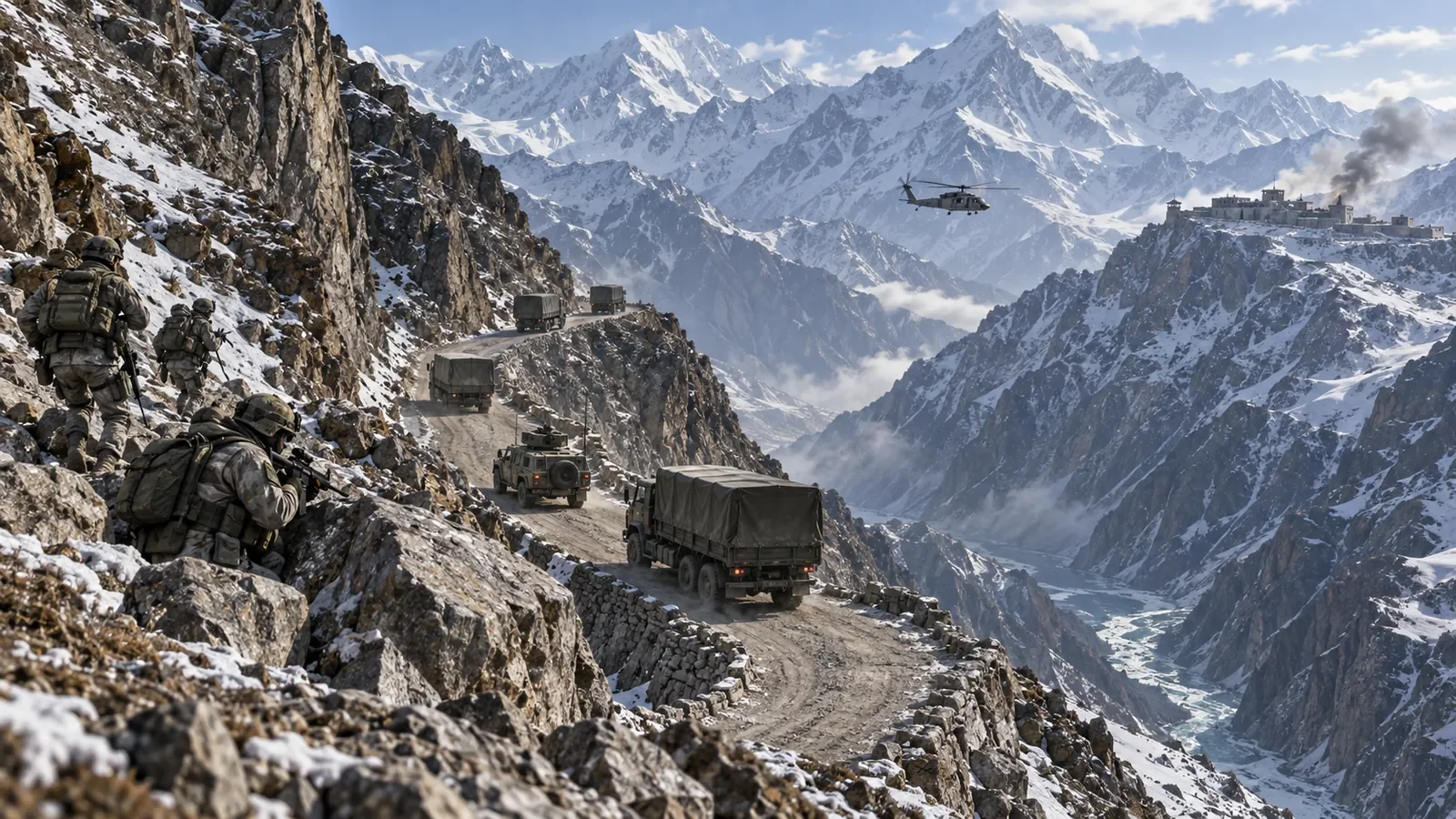
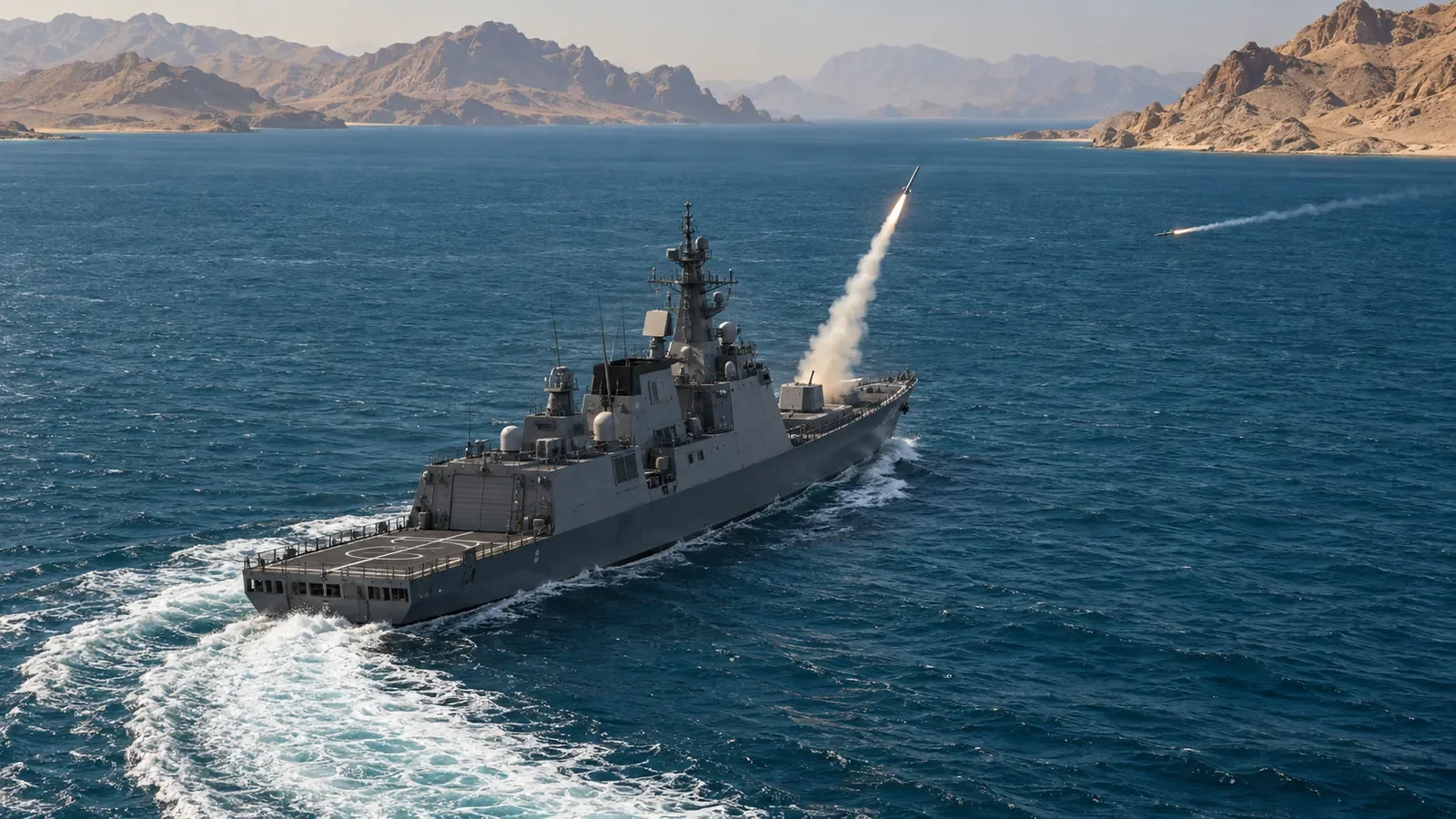
Explore scenario-based conflict forecasts built from MPR rankings, force posture, doctrine alignment, geography, missile power, air defense, logistics, strategic endurance and multi-domain warfare analysis.
Behind the MPR War Simulator
MPR measures actual warfighting ability today. The interactive MPR War Simulator compares standardized military-power scores, with a separate defensive-stalemate rule for designated countries. MPR's wider ranking and scenario framework considers doctrine, geography, logistics, readiness, strategic depth, morale, industrial capacity, alliance support, air and missile defense, long-range strike power, cyber capability, nuclear deterrence and multi-domain warfighting effectiveness.
The interactive tool provides a neutral country-to-country comparison. Published MPR war simulations go further by examining the actual theater, political and military objectives, force posture, terrain, supply routes, escalation pathways, outside intervention and the conditions required for either side to achieve a meaningful victory.
For broader context behind the ranking and simulation system, explore the MPR Analysis Hub.
Conflict Archives and Battlefield Lessons
Historical conflicts provide lessons in surprise, maneuver, terrain, defensive depth, logistics, attrition, command failure and force concentration. These lessons help inform MPR's interpretation of modern military capability.
Doctrine, Strategy and Tactics
Military forces do not fight as inventories on a spreadsheet. Offensive, defensive, combined-arms, asymmetric, maritime, air, missile and information-warfare doctrines affect how military power can actually be used.
Country Doctrine Profiles
Country-specific doctrine helps explain differences in command style, operational priorities, escalation behavior, force employment and the ability to convert military resources into battlefield results.
209 Warfighting Factors
MPR's 209 factors are organized into 14 categories drawn from the study of historical and postwar conflicts. They cover personnel, firepower, readiness, logistics, doctrine, geography, morale, alliances, resilience, technology and combat effectiveness.
Standardized MPR Scores
Each country's total score is standardized against the global field. Its Z-score shows how far that military sits above or below the global average and enables consistent comparisons across the ranking system.
Z-Score Probability Model
The Compare Countries function measures the statistical difference between the attacker's and defender's standardized scores and converts that difference into an estimated probability of victory.
Monte Carlo Trials
Monte Carlo testing adds randomized battlefield variation across thousands of trials. This represents uncertainty and the fog of war rather than assuming that the stronger force always performs at its expected level.
Defensive Stalemates
Some theaters are treated as effectively unwinnable for an attacker because terrain, resistance, occupation requirements, political cost and strategic endurance make a durable imposed victory unrealistic.
Detailed Military Comparisons
Comparative profiles help explain why two similarly ranked countries may possess very different strengths, vulnerabilities, doctrines and pathways to victory.
Victory Condition Thresholds
The attacker's calculated probability is translated into one of four broad military outcomes. These categories distinguish between a decisive strategic result and a more limited tactical advantage. Outcome labels use the unrounded probability; displayed percentages are rounded.
The attacker is strongly positioned to impose its principal military objectives and produce a decisive strategic result.
The attacker holds a meaningful advantage, but the outcome is more limited, contested or dependent on execution.
The defender has enough position, resilience or theater advantage to frustrate the attack or deny a clean strategic result.
The defender is strongly positioned to defeat, contain or decisively frustrate the attack and deny the attacker its principal objectives.
Stalemate: Certain defending countries automatically return a stalemate because MPR assesses that even a substantially stronger attacker would be unlikely to secure a durable and enforceable strategic victory in that theater.
Sources and Simulator Method
The interactive calculator uses standardized MPR ranking scores and modeled uncertainty as a comparative baseline. The linked detailed scenarios examine how doctrine, geography, logistics and theater conditions can change a conflict result.
Review the source and methodology pages below for the public research trail, ranking model and combat-factor framework behind the simulator.
MPR War Simulator FAQ
How accurate is the MPR War Simulator?
The simulator provides a structured comparative estimate based on measured military capability. No mathematical model can predict war with certainty. Leadership decisions, surprise, alliances, geography, intelligence failures, political objectives and escalation can all alter an actual outcome.
What is the difference between Compare Countries and Monte Carlo?
Compare Countries calculates the probability directly from the difference between the countries' standardized MPR scores. Monte Carlo runs thousands of randomized trials and reports how frequently each side wins after battlefield uncertainty is introduced.
Why can a lower-ranked military defeat a higher-ranked military?
Rankings measure overall military capability, but wars occur under specific conditions. Geography, defensive preparation, objectives, local force concentration, doctrine, morale, logistics, alliance support and political limits can allow a lower-ranked force to defeat or frustrate a stronger one.
Does the simulator include nuclear weapons?
Nuclear capability contributes to MPR military-power assessments through deterrence and strategic-force factors. The basic comparison does not assume automatic unrestricted nuclear war. Detailed simulations can examine nuclear escalation separately when it is relevant to the scenario.
Why do some defending countries automatically produce a stalemate?
Some countries present exceptionally difficult invasion, occupation and pacification environments. Terrain, dispersed resistance, political costs, local endurance and the inability to impose a durable settlement can make decisive strategic victory unrealistic even for a much stronger attacker.
Does the basic simulator include alliances?
The basic comparison measures the two selected forces directly. Alliance intervention is examined through coalition comparisons and detailed MPR war-simulation scenarios where outside support forms part of the conflict.
Are MPR simulations predictions of future wars?
No. They are analytical models that explore military capability and plausible outcomes under defined assumptions. They do not claim that a particular war will occur or that political leaders will make any specific decision.