

Tactical Methods Library
The MPR Tactical Methods Library organizes battlefield-level methods by domain and purpose. Tactics are not the same as doctrine or strategy: tactics describe how forces fight inside a campaign, while strategy defines the wider objective and doctrine defines how a force is organized to fight.
Use this page with the MPR Strategy Reference Library, Doctrine Library, Doctrine by Country, War Simulator, War Simulations, MPR Algorithm, and 209 MPR Factors.
Illustrated tactical methods
Explore four entries from the library.

Layered Defense Belts
Multiple defensive lines to absorb and attrit enemy advances.
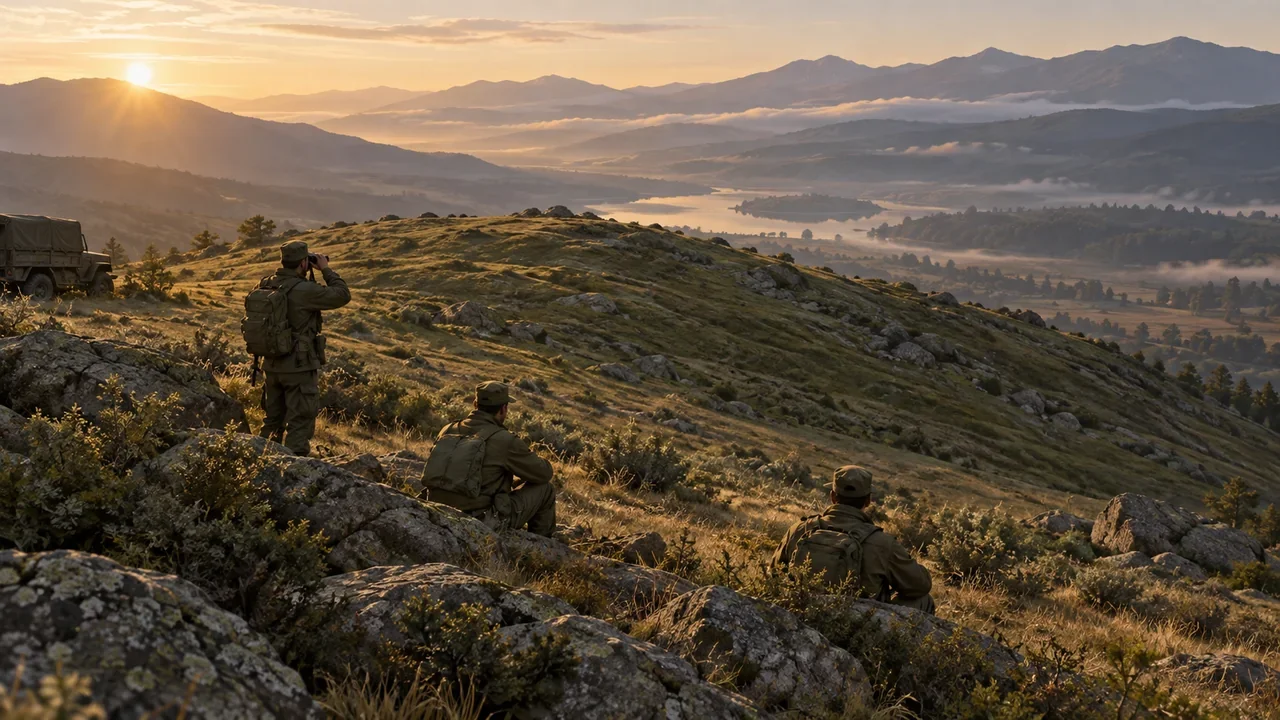
Reverse-Slope Positioning
Positioning forces behind a hill's crest to stay hidden until engagement.

Logistics Over the Shore
Move supplies across beaches or austere coastlines when ports are damaged, absent, or contested.
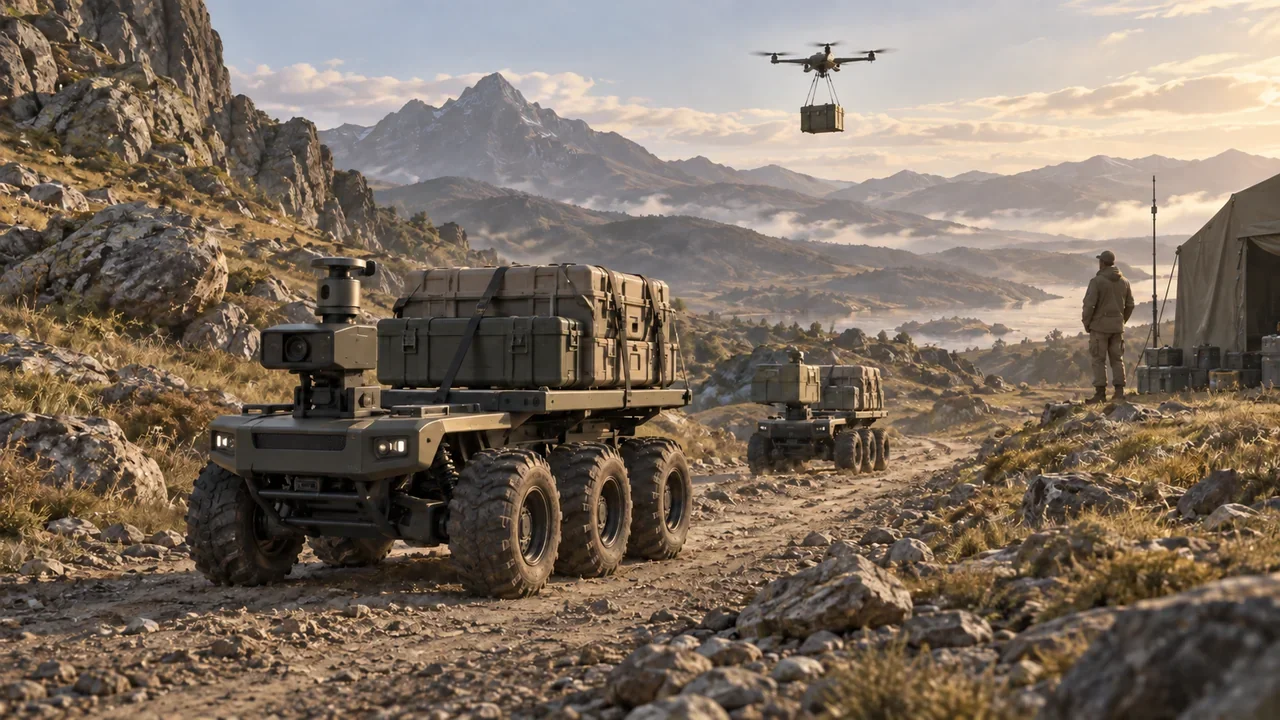
Remote Logistics via Robots
Unmanned resupply convoys and drones.
Tactical Categories
Defensive Tactics13 methods
Reverse-Slope Positioning
Positioning forces behind a hill's crest to stay hidden until engagement.
Interlocking Fields of Fire
Overlapping coverage zones to eliminate dead ground.
Funnel-and-Ambush Tactic
Channel attackers into kill zones with concentrated fire.
Layered Defense Belts
Multiple defensive lines to absorb and attrit enemy advances.
Elastic Withdrawal
Controlled retreat to inflict attrition while withdrawing.
Camouflaged Fire Positions
Concealment of firing points to avoid detection.
Pre-Registered Artillery Zones
Pre-planned strikes on kill zones for immediate response.
Decoy Fortifications
Fake defenses to mislead enemy targeting.
Counter-Sapper Measures
Obstacles and traps to thwart engineer breach teams.
Kill Zone Channeling
Directing attackers into fields of concentrated fire.
Mobile Anti-Tank Screens
Deployable AT teams to counter armor breakthroughs.
Sniper-Denial Grids
Counter-sniper measures to protect key areas.
Underground Bunker Systems
Subterranean networks for protection and mobility.
Offensive Tactics12 methods
Suppression and Advance
Suppression fire fixes the enemy while forces advance.
Flanking Envelopment
Attacking from side or rear to collapse enemy defenses.
Vertical Pincer
Airborne and ground envelopment from multiple axes.
Deep Armor Push
Armored thrusts into enemy rear to disrupt logistics.
Breach-and-Exploit
Penetrate defenses and rapidly expand the breach.
Saturation Bombardment
Massed fires to destroy or demoralize defenders.
Time-On-Target Artillery
Coordinated strikes landing simultaneously for shock.
Combat Engineer Breach Teams
Clearing mines and obstacles for the assault.
Dual-Axis Spearheads
Converging attacks to split enemy formations.
Urban Corridor Storming
Clearing urban routes block by block.
Infiltration Raids
Small units striking high-value targets behind lines.
Air-Ground Coordination
Joint targeting for precision strikes.
Expeditionary Tactics10 methods
Beachhead Expansion
Secure and enlarge lodgments on hostile shores.
Sea-to-Land Artillery Bridging
Naval gunfire support for initial land advances.
Airhead Establishment
Create forward landing zones for reinforcements.
Logistics Over the Shore
Move supplies across beaches or austere coastlines when ports are damaged, absent, or contested.
Forward Arming/Refueling
Proximate logistics hubs to sustain operations.
Helicopter Insertions
Rapid deployment behind enemy lines by air.
Combat Airlift Under Fire
Protected resupply missions in contested airspace.
Seizure of Ports
Capture port facilities intact for follow-on ops.
Modular FOB Construction
Quick assembly of forward operating bases.
Floating Supply Docks
Offshore platforms for sea-based logistics.
Asymmetric Tactics10 methods
IED Layering
Sequential placement of explosives for ambushes.
Underground Tunnels
Covert passage for movement and surprise attacks.
Hit-and-Fade
Quick strike and withdrawal before counterattack.
Civilian Terrain Concealment
Use urban terrain, population density, and visual ambiguity to conceal movement or delay identification. MPR treats this as a battlefield risk factor, not an endorsement of unlawful conduct.
Insider Attack Risk
Exploit access, trust, or mixed-force environments to strike inside protected spaces or disrupt coalition cohesion.
Targeted Sabotage Cells
Small units aimed at leadership disruption, infrastructure sabotage, or high-value target pressure.
Small Drone Strike Drops
Use small UAVs to drop munitions, spot targets, or create low-cost precision pressure.
Identity Misdirection
Exploit visual confusion, uniforms, markings, or movement patterns to slow target identification. MPR treats this as a deception risk category.
Minefield Baiting
Provoking movement into hidden minefields.
Sympathy Mobilization
Ideological appeals to garner support.
Multi-Domain Tactics10 methods
Real-Time ISR Fusion Loops
Integrated intelligence and reconnaissance for instant action.
Cyber and EW Disruption of C2
Use cyber effects, jamming, spoofing, or network attack to degrade command and control nodes.
Decoy Drone Swarms
Overwhelming defenses with fake or cheap drones.
GPS Spoofing
Feeding false navigation data to enemy forces.
No-Emission Movement
Operations without electronic emissions to avoid detection.
Drone-Assisted Kill Chains
Drones aiding target identification and strikes.
False Data Injection
Insert misleading data into sensors, command systems, or intelligence flows before contact.
Signal Reflection Warfare
Misleading radar by bouncing signals.
AI Threat Prioritization
Using AI to rank battlefield threats swiftly.
EW Saturation Zones
Mass jamming, spoofing, and electromagnetic pressure in defined fire or maneuver areas.
Psychological Tactics10 methods
Phantom Formation Deception
Create fake formations through decoys, signals, movement patterns, or misleading reporting.
Doctored Radio Traffic
Broadcasting misleading communications to confuse.
Media Weaponization
Manipulating coverage to influence morale.
Attribution Deception Sabotage
Use ambiguous attribution, staged signals, or misdirection to delay response and confuse responsibility.
False De-escalation Pressure
Use negotiation signals or pauses to alter enemy readiness, tempo, or political perception.
Simulated Nuclear Readiness
Feigning escalation to deter or intimidate.
Loudspeaker Ops
Psychological broadcasts to demoralize troops.
Blackout Induction
Cutting utilities to sow panic and confusion.
Command Structure Disinformation
Spread false command relationships, unit locations, or order channels to disrupt coordination.
Controlled Prisoner Releases
Releasing captives for propaganda or leverage.
Future-Oriented Tactics10 methods
Swarm Recon-Attack Loops
Autonomous drone groups for continuous ops.
AI-Assisted Target Prioritization
Use AI support to rank targets, threats, and time-sensitive opportunities faster than manual command processes.
Predictive Engagement Support
Use machine learning to anticipate likely movement, vulnerability windows, or threat behavior.
Autonomous Drone Clusters
Use coordinated UAV groups with partial autonomy for reconnaissance, saturation, deception, or strike support.
Resilient Tactical Communications
Use hardened, redundant, or next-generation communications to resist jamming, spoofing, and interception.
Directed Energy Tactical Defense
Use directed-energy systems to disable drones, sensors, electronics, or incoming threats at short range.
Automated Defense Grids
AI-run perimeter defenses with minimal human input.
Remote Logistics via Robots
Unmanned resupply convoys and drones.
Local Space-Denial Effects
Use jamming, deception, cyber, or interception pressure to reduce satellite support in a defined battlespace.
Augmented Battlefield Guidance
Use visual overlays, digital navigation, and sensor-fed displays to support movement, targeting, and coordination.
Tactical Method and Sources
MPR tactical methods are used as battlefield-level reference concepts for interpreting doctrine, scenario behavior, force employment, and combat effectiveness. For the research basis and scoring context behind these categories, review the MPR Sources, MPR Algorithm, and 209 Ranking Factors.