

Estonia Military Power Ranking 2026

Estonia ranks 130th globally in the 2026 Military Power Rankings. As a Baltic NATO member bordering Russia, Estonia maintains a defense system based on total defense, rapid mobilization, cyber resilience, and NATO integration.
The Estonian Defence Forces are relatively small but professionally trained, with doctrine built around asymmetric defense, civilian-military resilience, digital warfare, and strategic deterrence through alliance reinforcement.
MPR Overview
Estonia ranks 130th globally in the 2026 Military Power Rankings. As a Baltic NATO member bordering Russia, Estonia maintains a uniquely structured military based on total defense, rapid mobilization, and civilian-military resilience. Its armed forces are relatively small but professionally trained, and deeply integrated into NATO’s command architecture, with a doctrine emphasizing asymmetric defense, digital warfare, and strategic deterrence.
The Estonian Defence Forces (EDF) include active ground units, cyber command, and a strong voluntary reserve component under the Kaitseliit (Estonian Defence League). Estonia hosts NATO rotational battlegroups, participates in Baltic Air Policing, and contributes to NATO Response Force (NRF) operations. Its national security model stresses the mobilization of society, distributed resistance, and interoperability, rather than conventional force-on-force dominance.
Strategic Geography Schematic
- Tallinn
- command
- Baltic Sea and Gulf of Finland
- Russia axis
- Latvia / Baltic logistics
- Legend
- capital / command node
- eastern threat axis
- NATO reinforcement routes
- maritime / western access
- reserve and logistics node
MPR strategic geography schematic. This is an analytical military-geography visual, not a survey-grade political map.
Core MPR Strengths
NATO Integration and Forward Defense
Estonia is deeply integrated into NATO command systems, hosts allied forces, supports Baltic Air Policing, and trains around rapid reinforcement and eastern flank deterrence.
Cyber Warfare and Digital Defense
Estonia is one of the world's most respected cyber-defense states relative to size, with strong digital infrastructure, NATO cyber cooperation, and national resilience planning.
Total Defense and Mobilization
Estonia uses conscription, reserves, civil preparedness, territorial defense, infrastructure resilience, and the Estonian Defence League to expand military utility beyond the active force.
Estonia is one of the most tightly integrated NATO members, hosting multinational battlegroups, participating in joint command systems, and training alongside U.S., U.K., and German forces, significantly enhancing its force multiplier effect.
Estonia is globally recognized as a pioneer in cyber defense, hosting NATO’s Cooperative Cyber Defense Centre of Excellence in Tallinn, and fielding elite cyber units capable of offensive and defensive digital operations.
The country’s total defense model includes civilian training, widespread reserve enlistment, and infrastructure resilience, making Estonia capable of mounting prolonged resistance even in occupation scenarios.
MPR Doctrine and Strategy
Estonia's doctrine is based on total defense, asymmetric resistance, NATO interoperability, rapid mobilization, and digital resilience. It is designed to make aggression costly while ensuring allied reinforcement can arrive and integrate quickly.
The Estonian Defence Forces emphasize territorial defense, reserve readiness, cyber defense, distributed operations, mine warfare, coastal surveillance, and protection of critical infrastructure. Estonia does not aim to defeat a major power alone through conventional mass; its strategy is to survive, resist, disrupt, and hold command continuity long enough for NATO collective defense to take effect.
Force Profile
Ground Forces
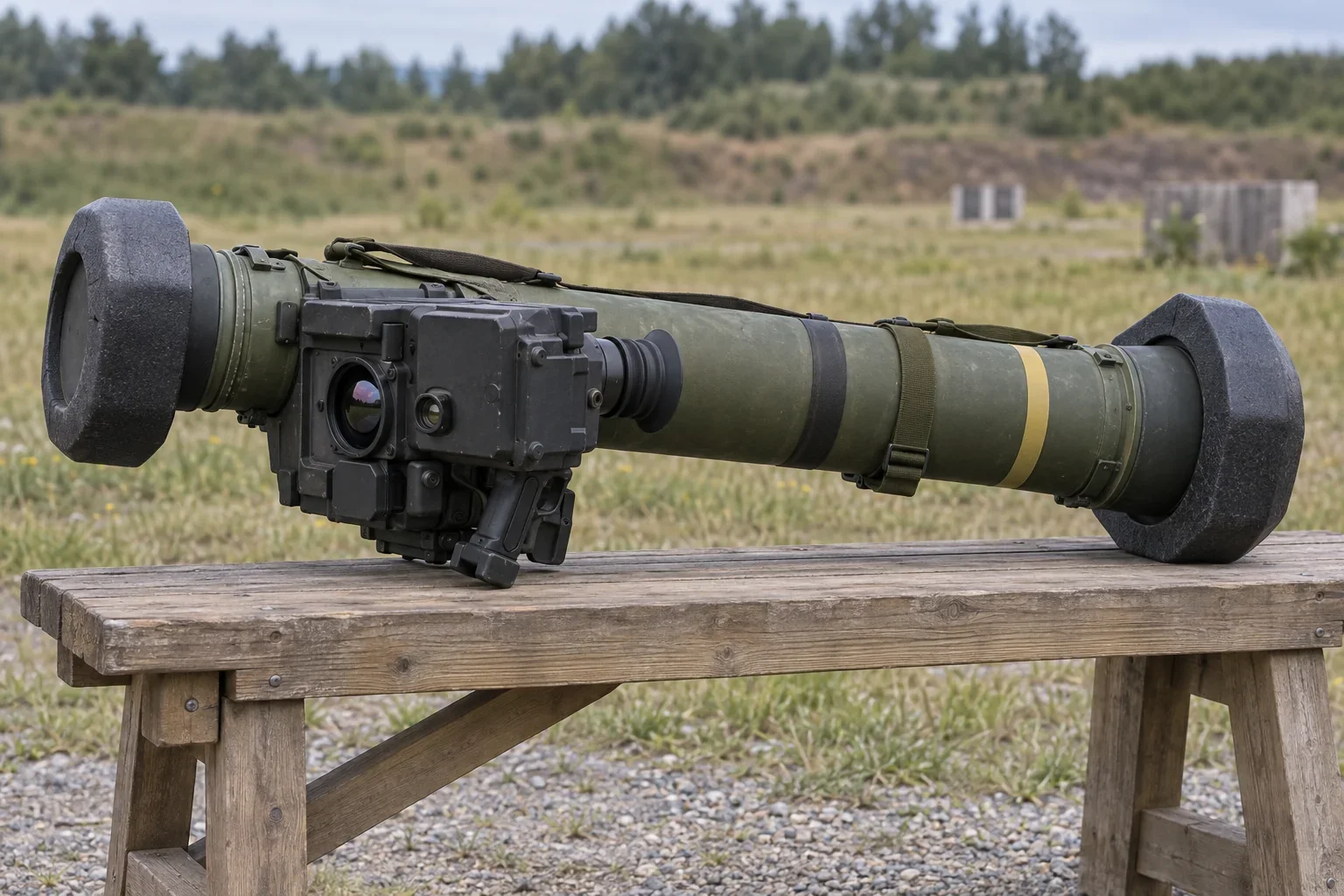
Estonia's ground forces are small but NATO-standardized, focusing on territorial defense, reserve mobilization, anti-armor warfare, artillery, and distributed resistance. Key ground assets include CV90 and Patria armored vehicles, artillery systems, Javelin anti-tank weapons, and HIMARS precision rocket systems.
Air Power
| Aircraft / Service | Dated Listed Holdings or Orders | Directory Category / Update |
|---|---|---|
| M28 — Estonian Air Force | 2 listed active; November 2025 | Transport |
Listed active holdings at the directory snapshot, not September 2026 serviceable/ready counts. Ordered figures remain separate; an asterisk is the directory option/letter-of-intent category. A missing entry is not evidence of zero.
MPR role and readiness assessment: Air defense, air policing, deterrence, allied presence; Utility transport, liaison, training support; Air surveillance, command integration, NATO air-defense coordination. These assessments are separate from the directory’s listed holdings.
Estonia does not operate combat aircraft. Air defense and air policing rely heavily on NATO, with allied aircraft rotating through Baltic Air Policing and using facilities such as Amari Air Base.
NATO allies conduct Baltic Air Policing from Ämari Air Base
An-2 and light transport aircraft for domestic use
NATO-integrated radar and command systems
Naval Forces
Estonia's navy is focused on mine countermeasures, maritime surveillance, patrol duties, and security in the Gulf of Finland and Baltic Sea approaches.
| Naval Asset | Status | Primary Role |
|---|---|---|
| Sandown-class minehunters | Active | Mine countermeasures, Baltic Sea security, NATO maritime cooperation |
| Multi-purpose patrol boats | Operational | Maritime surveillance, coastal patrol, Gulf of Finland security |
| Naval infrastructure | Regional capacity | Support to mine warfare, patrol operations, and allied maritime access |
Multi-purpose patrol boats used for maritime surveillance in the Gulf of Finland
Merchant Marine Fleet: ~60 vessels
Naval Replenishment Capability: Regional capacity only
Missile Systems
Estonia possesses HIMARS long-range precision rocket systems (acquired from the United States), significantly enhancing its strike range. Additional anti-tank and short-range SAM systems such as Javelin, Mistral, and Piorun are operational. Estonia does not possess strategic missile systems. Estonia has HIMARS long-range precision rocket systems, a major force multiplier for its small military.
Estonia does not possess strategic missile systems, but its tactical missile and rocket capabilities are important within NATO's forward-defense framework.
Long-range fires and layered defense
HIMARS entered Estonian service in 2025. The Blue Spear coastal missile system had arrived in February 2024, adding a sea-denial role that the older description of no naval strike capability omitted. Estonia is also introducing IRIS-T medium-range air defense, with deliveries scheduled for 2026 in the Ministry of Defence’s January 2026 account. The delivery schedule should not be treated as proof that every element was operational on that publication date. Together these programs expand national firepower while remaining dependent on trained crews, surveillance, ammunition, and allied integration.
Detailed Missile Inventory
| System Category | Status | Operational Role | MPR Assessment |
|---|---|---|---|
| Strategic ballistic missiles | None | Not applicable | No strategic missile capability |
| HIMARS | Acquired from the United States | Long-range precision rocket artillery | Major force multiplier for a small military |
| Javelin anti-tank missiles | Operational | Anti-armor defense | Important for asymmetric territorial defense |
| Mistral air-defense systems | Operational | Short-range air defense | Tactical point-defense capability |
| Piorun MANPADS | Operational | Short-range local air defense | Useful for distributed resistance and point defense |
| IRIS-T SLM | Modernization planning | Medium-range air defense | Improves layered NATO-compatible air defense |
Nuclear and Strategic Deterrence
Estonia is a non-nuclear state. Its deterrence model depends on NATO Article 5, allied forward presence, rapid mobilization, cyber resilience, and territorial resistance.
Cyber, Space, ISR, and Electronic Warfare
Estonia is one of the world's most prominent cyber-defense states relative to size. Its cyber capabilities are advanced and closely integrated with NATO and EU security frameworks.
Following the 2007 cyberattacks attributed to Russian-linked actors, Estonia became a global leader in cyber defense, digital infrastructure protection, and NATO cyber cooperation.
Partnerships
Estonia is a core NATO member, hosts a British-led multinational battlegroup, and participates in joint Baltic and Nordic defense initiatives. It is closely allied with the United States, United Kingdom, and Finland, and a leader in NATO’s cyber defense infrastructure. Estonia regularly participates in large-scale NATO exercises and rapid deployment drills.
NATO
NATO is the foundation of Estonia's defense model, providing collective defense, forward presence, air policing, command integration, exercises, and rapid reinforcement planning.
United Kingdom and United States
The UK-led battlegroup and U.S. defense cooperation support forward defense, training, interoperability, and deterrence against regional threats.
Baltic and Nordic Partners
Estonia cooperates closely with Latvia, Lithuania, Finland, Sweden, and other regional partners on air defense, cyber security, logistics, and regional security planning.
Combat History
Estonia’s modern military history is framed by its struggle for independence, occupation during the 20th century, and rapid modernization since joining NATO, with limited combat experience but high multinational involvement.
| Conflict or Operation | Period | Military Significance |
|---|---|---|
| War of Independence | 1918-1920 | Estonia fought Soviet Russia and German Freikorps units to establish independence after World War I. |
| Soviet and Nazi occupation | 1940-1991 | Successive occupations shaped resistance memory, forced conscription history, and modern national survival doctrine. |
| Post-independence military development | 1991-2004 | Estonia rebuilt its defense force around Western standards, territorial defense, voluntary reserves, and NATO interoperability. |
| Peacekeeping and NATO operations | 1990 s-present | Estonian forces have deployed to Iraq, Afghanistan, Mali, and the Balkans, gaining coalition experience. |
| Cyber defense engagement | 2007-present | After major cyberattacks in 2007, Estonia helped anchor NATO's cyber defense infrastructure. |
War of Independence (1918–1920)
Estonia fought against both Soviet Russia and German Freikorps units to establish independence after World War I. The war laid the foundation for Estonia’s guerrilla defense doctrine and territorial resilience strategy.
Soviet and Nazi Occupation (1940–1991)
Estonia was successively occupied by the Soviet Union, Nazi Germany, and again by the Soviets, resulting in forced conscription, guerrilla resistance movements (e.g., the Forest Brothers), and military suppression. Modern Estonian doctrine draws symbolic and tactical inspiration from this period.
Post-Independence Military Development (1991–2004)
Following restored independence, Estonia began building a national defense force based on Western standards, culminating in NATO accession in 2004. The EDF was restructured around territorial defense, voluntary reserves, and international interoperability.
Peacekeeping and Coalition Operations (1990s–present)
Estonian forces have deployed to Iraq, Afghanistan, Mali, and the Balkans, gaining experience in coalition logistics, counterinsurgency, and combat support roles under NATO and EU command.
Cyber Defense Engagement (2007–present)
Following the 2007 cyberattacks attributed to Russian-linked actors, Estonia became a global leader in cybersecurity, founding the NATO Cyber Centre and prioritizing digital infrastructure protection as a national security pillar.
Estonia’s military experience is focused on resistance planning, cyber defense, and multinational collaboration, reflecting a doctrine built for survivability, NATO reinforcement, and total societal defense, not unilateral warfighting.
Geography, Economy, and Infrastructure
Conventional oil and natural-gas reserves were recorded as none in MPR’s 2025 assessment. Oil production was also listed as none, a description that requires a distinction: Estonia produces shale oil from oil shale. Shale-oil manufacturing is distinct from conventional crude-oil production and proved petroleum reserves.
Estonia's terrain is lowland, swampy, flat to slightly rolling, and marked by many lakes. Its climate and Baltic coastline make maritime access, infrastructure resilience, and NATO reinforcement planning strategically important.
Climate: Maritime; wet, moderate winters and cool summers
Terrain: Lowland, swampy, with many lakes; flat to slightly rolling
Natural Resources: Oil shale, peat, phosphorite, forests, arable land
National Metrics
| Metric | Estimate or Status |
|---|---|
| Capital | Tallinn |
| Founding date | February 24, 1918; restored independence in 1991 |
| System of government | Unitary parliamentary republic |
| Military Expenditure | US$1.58 billion (2025; SIPRI) |
| Military Expenditure / GDP | 3.37% (2025; SIPRI) |
| GDP, PPP | Approximately Int$65 billion (MPR estimate; reference year not stated) |
| GDP Per Capita, PPP | Approximately Int$47,000 (MPR estimate; reference year not stated) |
| External Debt | Approximately $30 billion USD (MPR estimate; reference year not stated) |
| Spending Trend | SIPRI nominal current-US$ series: US$748.7 million (2021) to US$1.58 billion (2025); exchange rates and inflation affect this comparison. Retained MPR assessment: Rapid increase in response to regional security threats |
| Airports | Approximately 17 |
| Road network | Approximately 59,000 km |
| Railway network | Approximately 1,200 km |
Military Infrastructure and Readiness
Estonia's major military installations include Tallinn, Tapa, Voru, and Amari Air Base. Major ports include Tallinn and Paldiski, supporting NATO reinforcement, domestic mobilization, and regional logistics.
Major Military Districts / Commands: Divided under Estonian Defence Forces (EDF) General Staff
Missile Inventory Highlights: Javelin, Mistral, IRIS-T SLM, HIMARS (in service since 2025)
Major Military Airports: Ämari AB
Military Installations (Domestic): Tallinn, Tapa, Võru
Military Installations (Overseas): NATO missions
Foreign Military Personnel Presence: NATO Enhanced Forward Presence (UK-led)
Defense Alliances: NATO, EU
Defense Industry
Estonia has a specialized defense-industrial base focused on UAVs, software, communications, light arms, cybersecurity, electronic warfare, and digital infrastructure.
Why Estonia Ranks 130th
Small Active Force
Estonia’s small standing military fields no main battle tanks or national fighter fleet, although K9 artillery and HIMARS provide long-range fires, making it reliant on reserves, guerrilla-style tactics, and allied reinforcement in wartime. Estonia's standing military is under 7,000 personnel, making it dependent on reserves, mobilization, allied presence, and distributed defense planning.
No Heavy Armor or Combat Air Force
Estonia has no main battle tanks, no combat aircraft, and limited organic air-defense depth, reducing independent conventional warfighting capacity.
Reliance on NATO Reinforcement
In the event of a large-scale attack, Estonia's defense plan relies on rapid NATO intervention, without which the country lacks sufficient means to repel sustained assaults from peer-state adversaries. In a large-scale attack, Estonia's defense model depends on rapid NATO intervention, allied airpower, forward battlegroups, and collective defense planning.
Estonia's low ranking reflects scale and limited heavy weaponry, not lack of relevance, preparedness, or strategic importance within NATO's eastern defense posture.
Estonia has limited national airlift and expeditionary logistics, participates in shared allied strategic airlift, and received Blue Spear coastal anti-ship missiles in 2024. Its small scale still concentrates the force on homeland defense and limited alliance deployments.
Estonia maintains one of the most sophisticated and digitally capable defense systems per capita, leveraging NATO integration, cyber expertise, and a total defense doctrine to compensate for its small size. While its heavy forces remain small and independent strategic power projection is limited, Estonia is a leader in asymmetric defense, resilience planning, and digital warfare, making it a strategically important but materially limited military power. Its low ranking reflects its scale, not its relevance or preparedness.
MPR Tools and Comparisons
Related Country Profiles
Ranking Navigation
War Simulations
Use the MPR War Simulator to compare Estonia with another military using MPR rankings, force structure, doctrine, geography, strategic depth, NATO support, cyber resilience, combat history, and scenario-specific conditions.
Research Trail
Statistics Estonia: volume of industrial production increased 1.7% in 2025 supports the dated energy-resource qualification in this profile.
Economic figures retain their displayed years and statistical coverage. PPP figures are expressed in international dollars; SIPRI military-expenditure shares use its own GDP denominator. Retained MPR estimates are separate from the dated source observations. World Bank population profile; SIPRI military expenditure database.
Retained comparative personnel table (IISS citations and dated categories); FlightGlobal World Air Forces 2026 (November 2025). Personnel estimates and listed aircraft holdings do not measure immediately ready forces. Country-specific later evidence appears separately.
This country profile draws on military personnel estimates, force-structure reporting, government information, defense publications, international organizations, economic data, historical records, and the Military Power Rankings analytical framework.
Figures are estimates and may vary by reporting period, source methodology, operational availability, maintenance status, and the distinction between authorized, active, reserve, stored, and serviceable equipment.
Country-Specific SourcesExplore More Military Power Rankings
Research Library
© 2026 Military Power Rankings. Privacy & Site Policy