

Bosnia and Herzegovina Military Power Ranking 2026
Bosnia and Herzegovina ranks 108th globally in the 2026 Military Power Rankings. Its armed forces, the Armed Forces of Bosnia and Herzegovina, were formed after the 1992-1995 Bosnian War as a unified, multi-ethnic, state-controlled military.
The AFBiH is built around territorial integrity, internal security, post-conflict stabilization, NATO interoperability, peacekeeping, and civilian-controlled defensive readiness.
MPR Overview
Bosnia and Herzegovina ranks 108th globally in the 2026 Military Power Rankings. Its armed forces, the Armed Forces of Bosnia and Herzegovina (AFBiH), were formed in the aftermath of the 1992-1995 Bosnian War as a unified, multi-ethnic, and state-controlled military, built to ensure territorial integrity, internal security, and post-conflict stabilization.
The AFBiH operates under civilian oversight, follows a doctrine of defensive readiness, and emphasizes NATO interoperability and international peacekeeping engagement.
While small in size and constrained by internal political fragmentation, the AFBiH maintains a professional force structure, supported by training, logistics modernization, and command reform assistance from NATO, the European Union, and the United States.
Strategic Geography Schematic
- Sarajevo command center and central mountain corridor
- Croatia-facing western approach and short Adriatic outlet near Neum
- Serbia-facing eastern security axis and political-military friction
- NATO/EUFOR interoperability, peacekeeping preparation, and stabilization depth
- Dinaric terrain, valleys, and constrained mobility
Analytical MPR visual: Sarajevo command hub, Dinaric mountain terrain, Croatia/Serbia-facing approaches, Neum coastline, and NATO/EUFOR stabilization framework.
MPR strategic geography schematic. This is an analytical military-geography visual, not a survey-grade political map.
Core MPR Strengths
NATO-Aligned Training and Interoperability
The AFBiH has benefited from nearly two decades of NATO training missions, achieving interoperability standards in command procedures, logistics, and peacekeeping readiness. It has participated in NATO's Partnership for Peace since 2006.
Post-Conflict Professionalization
The AFBiH was successfully restructured into a single national force after decades of ethnic division, integrating former Bosniak, Croat, and Serb military elements under one chain of command with civilian democratic oversight.
Active Peacekeeping and International Deployment
Bosnian troops have served in UN, EU training, and NATO missions, including in Mali, Congo, and Afghanistan, showcasing their discipline, adaptability, and alignment with international operational standards.
MPR Doctrine and Strategy
Bosnia and Herzegovina's military doctrine is defensive, stabilization-focused, and shaped by the country's post-war political structure. The armed forces are designed to protect territorial integrity, support civil authorities, maintain internal stability, and contribute to international peacekeeping.
The AFBiH does not emphasize offensive power projection or independent high-intensity warfare. Its doctrine instead centers on professional infantry readiness, interoperability with NATO partners, disaster response, peace-support operations, and unified command under civilian control.
Internal political division remains a key constraint on strategic planning, procurement, and modernization. This limits the speed and depth of reform even when foreign training and institutional support are available.
Force Profile
Bosnia and Herzegovina fields a small professional force centered on land defense, peacekeeping, crisis response, and civil-military support. Its size and budget limit independent operational depth, but the force remains institutionally important inside the Bosnian state.
Ground Forces
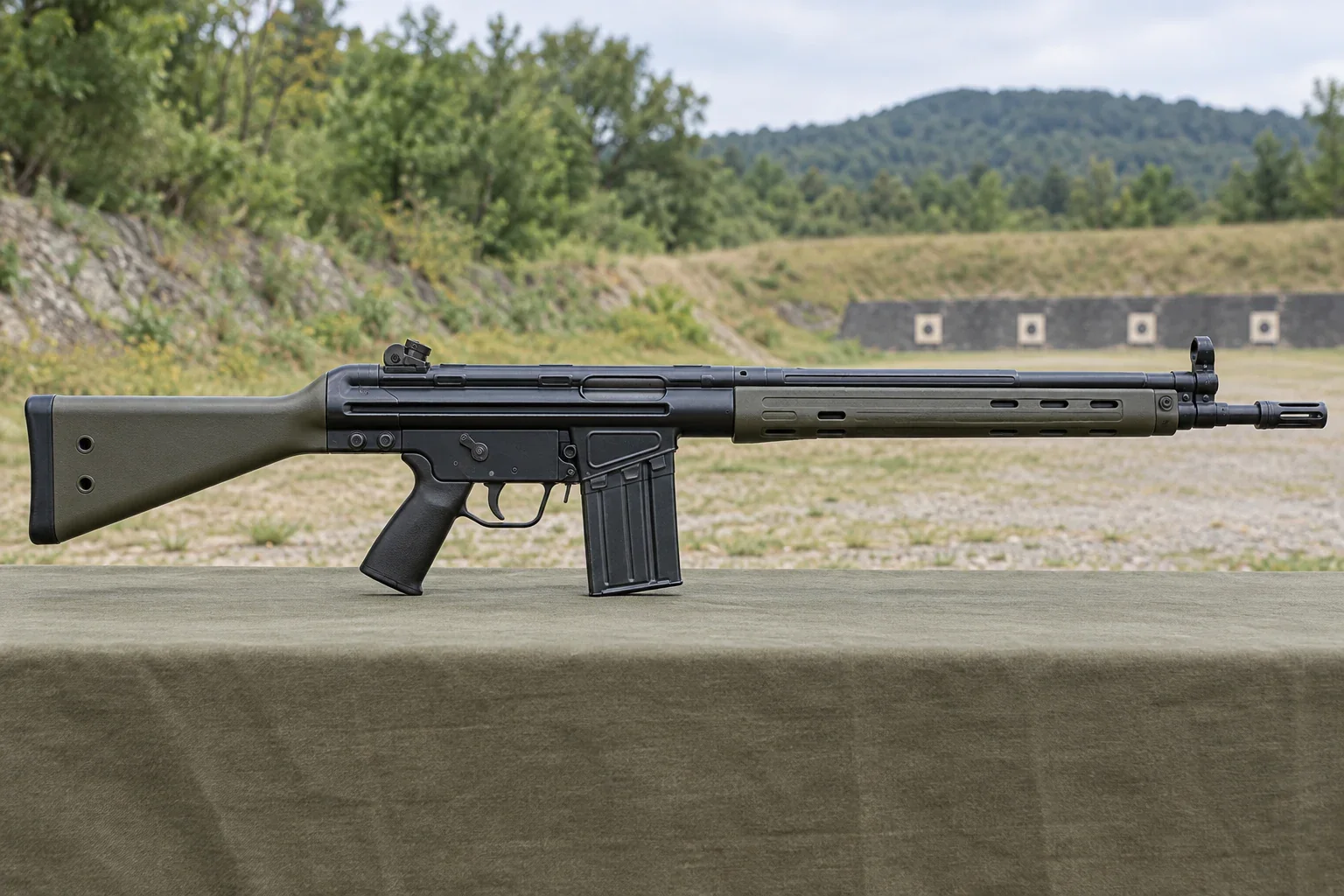
Bosnia's ground forces retain legacy armor, artillery, and infantry equipment from the Yugoslav and post-Yugoslav military environment. The inventory provides basic territorial-defense capability but is limited by age, sustainment requirements, modernization gaps, and procurement constraints.
The ground force is most useful for national defense support, domestic emergency response, peacekeeping preparation, and limited conventional operations rather than extended high-intensity warfare.
Air Power
Bosnia and Herzegovina does not operate fighter aircraft or an advanced combat air arm. Its aviation capability is concentrated on helicopters, rotary-wing transport, humanitarian support, training, and domestic mobility.
| Aircraft Type | Dated Inventory | Primary Role |
|---|---|---|
| Mi-8/17 / UH-1H / SA341/342 | Helicopter fleet listed in FlightGlobal 2026 | Transport, utility support and training |
| Fixed-wing combat and transport aircraft | None listed in the 2026 directory | Dependence on external arrangements for strategic airlift |
The absence of fighter aircraft, modern air defense systems, and advanced ISR assets limits Bosnia's ability to control airspace independently during a major conflict.
Naval Forces
Bosnia has no navy. While the country does have a short Adriatic coastline at the town of Neum, it lacks operational naval forces and relies on civil maritime administration and foreign partners for maritime defense.
Missile Systems
Bosnia does not maintain strategic missile systems. Its legacy air defense systems and ground forces rely on conventional artillery, anti-tank guided weapons, MANPADS, mortars, MLRS, and small arms.
There is no strategic missile program, no long-range strike capability, and no missile force capable of regional deterrence.
Detailed Missile Inventory
| System Category | Status | Operational Role | MPR Assessment |
|---|---|---|---|
| Ballistic missiles | None | Not applicable | No strategic ballistic missile capability |
| Cruise missiles | None | Not applicable | No long-range precision-strike capability |
| MANPADS | Limited | Short-range local air defense | Limited tactical defensive value |
| Anti-tank guided weapons | Limited | Ground defense and infantry support | Useful against vehicles but limited by quantity and modernization |
| Multiple launch rocket systems | 20+ | Area fire support | Legacy firepower with limited strategic effect |
| Mortars and artillery | Operational | Infantry fire support and territorial defense | Relevant to defensive ground operations |
Nuclear and Strategic Deterrence
Bosnia and Herzegovina is a non-nuclear state and has no strategic deterrent. Its security framework is based on domestic defense institutions, international stabilization support, NATO cooperation, EUFOR presence, and regional diplomacy.
Cyber, Space, ISR, and Electronic Warfare
Bosnia's cyber, space, ISR, and electronic-warfare capabilities remain limited but developing. The country does not operate military satellites, strategic reconnaissance systems, or an advanced electronic-warfare architecture.
ISR and intelligence activity is focused on domestic security, counterterrorism, border awareness, international cooperation, and coordination with European security structures.
Partnerships and Alliances
Bosnia is a NATO Partnership for Peace member and has aspirations for full NATO integration. The country cooperates extensively with the European Union and the United States, and it has contributed personnel to UN peacekeeping and the EU training mission in the Central African Republic.
NATO Partnership for Peace
NATO cooperation supports training, interoperability, command reform, logistics standards, institutional development, and peacekeeping readiness.
European Union and EUFOR
EUFOR Althea remains an important stabilization presence in Bosnia and supports domestic readiness, defense reform, and security coordination.
United States
U.S. assistance focuses on training, democratic oversight, professionalization, and institutional modernization.
Combat History
Bosnia and Herzegovina's military history is rooted in the 1992-1995 Bosnian War, a brutal ethnic conflict that reshaped the region and directly led to the establishment of the modern AFBiH.
Borderlands, Empires and the First World War
Bosnia's military history developed around mountain routes, fortified towns and the competing interests of larger powers. The medieval Bosnian kingdom fell to Ottoman conquest in 1463, while Ottoman control extended over Herzegovina in the following decades. Frontier garrisons and local military elites connected the region to a much wider imperial defensive system. Austria-Hungary occupied Bosnia and Herzegovina in 1878 and formally annexed it in 1908. These changes brought a new administrative and military structure while preserving the strategic importance of routes between the Adriatic coast, the central mountains and the northern plains.
The assassination of Archduke Franz Ferdinand in Sarajevo on 28 June 1914 became the immediate trigger for the diplomatic crisis leading to the First World War. Bosnian-Herzegovinian troops served within the Austro-Hungarian army, and the region's military experience formed part of the empire's wider war. After its collapse in 1918, Bosnia and Herzegovina entered the new South Slav kingdom. Successive imperial and Yugoslav systems left traditions of military service and external command that would influence later institutions.
Occupation, Persecution and Resistance, 1941–1945
The Axis invasion of Yugoslavia in April 1941 destroyed the kingdom's military order. Bosnia and Herzegovina was incorporated into the Axis-backed Independent State of Croatia, where the Ustaša authorities persecuted and murdered Serbs, Jews and Roma. Occupation and mass violence produced a fragmented battlefield involving Axis troops, collaborating forces, communist-led Partisans and Serb nationalist Chetniks. Civilian survival, political allegiance and military control became tightly connected, often with devastating consequences for communities.
The Partisan movement used difficult terrain and dispersed operations to sustain resistance, while occupation forces sought to control settlements, communications and supply routes. The war established a powerful legacy of guerrilla mobility, local support networks and political organization. It also left a history of atrocities that cannot be separated from the military campaigns. Partisan victory brought Bosnia and Herzegovina into socialist Yugoslavia and made wartime resistance central to the new state's military identity.
Yugoslav Service and the Collapse of the Federation
As a Yugoslav republic, Bosnia and Herzegovina participated in a common federal defence system. Its personnel, installations and industrial capacity belonged to that wider strategic structure. The later inheritance of weapons and military skills was therefore substantial, but the breakup of federal authority created rival chains of command. The transition from a shared military system to competing forces became a central problem of the 1990s war and of the reform process that followed it.
The Bosnian War, 1992–1995
Independence in 1992 was followed by a devastating war involving the Army of the Republic of Bosnia and Herzegovina, the Army of Republika Srpska, the Croatian Defence Council and other formations, with major involvement and support from neighboring states. Front lines separated towns, transport corridors and enclaves. Control of roads and surrounding heights could isolate communities and determine whether military supplies or humanitarian relief reached them. The conflict combined conventional weapons and organized formations with siege warfare, local armed groups, forced displacement and attacks on civilians.
Sarajevo endured a prolonged siege in which shelling and sniping terrorized civilians as well as constraining defenders. Elsewhere, detention camps, expulsions, sexual violence and killings were used against civilian populations. In July 1995, Bosnian Serb forces overran Srebrenica, a UN-declared safe area, and murdered more than 8,000 Bosnian Muslim men and boys. International courts established that the Srebrenica crimes constituted genocide. Military experience from this period includes endurance under siege and improvisation under severe supply constraints, alongside the enduring institutional obligation to protect civilians and uphold lawful command.
International Intervention and Dayton
NATO began enforcing the UN-authorized no-fly zone through Operation Deny Flight in April 1993. Its first combat engagement followed in February 1994 when NATO aircraft shot down four aircraft violating the zone. Operation Deliberate Force in August–September 1995 struck Bosnian Serb military targets and contributed to the conditions for negotiations. Diplomacy culminated in the Dayton settlement, signed in Paris on 14 December 1995.
The NATO-led Implementation Force, IFOR, deployed to enforce the military agreement, separate opposing forces and oversee territorial transfers and heavy-weapons arrangements. SFOR succeeded it in December 1996, helping sustain a secure environment for reconstruction, refugee return, demining and institutional reform. EUFOR Althea assumed the stabilization role in December 2004, while NATO retained a headquarters in Sarajevo. International military presence provided security space for reform, but building a shared national command remained a domestic political and organizational undertaking.
From Entity Armies to a Unified Force, 2005–2007
The decisive reform was the transfer of defence authority from the entities to the state. The 2005 legislation established the basis for integration; entity defence ministries and armies were abolished in January 2006, conscription ended and a single state defence budget took effect. The July 2006 establishment specified 10,000 professional military personnel, 1,000 civilians and 5,000 reservists. Commands and brigades were organized through 2007. Unification gave the country common operational structures while accommodating the traditions of former forces within a multi-ethnic institution.
International Service and Domestic Assistance
Overseas deployments helped turn integration into practical cooperation. Bosnia and Herzegovina sent explosive-ordnance specialists to Iraq from 2005 and contributed to NATO missions in Afghanistan, completing its Resolute Support participation in 2021. Personnel also served in UN missions in the Democratic Republic of the Congo and Mali and in the EU training mission in the Central African Republic. These distinct assignments developed staff work, force protection, logistics and cooperation with multinational headquarters. At home, engineering, demining and emergency assistance connect military readiness to the safety and resilience of civilian communities.
Partnership and the Present Force
Bosnia and Herzegovina joined NATO's Partnership for Peace in 2006 and was invited into the Membership Action Plan in 2010. Cooperation supports professional standards, democratic oversight and interoperability without making the country a NATO member. NATO and Bosnia and Herzegovina agreed their first Individually Tailored Partnership Programme in October 2025. Capacity-building includes crisis management, cyber defence, medical evacuation and counterterrorism, extending the reform agenda beyond traditional infantry training.
The military's modern significance lies in the combination of integrated command, professional service and an ability to contribute useful small contingents. Its history also explains the limits highlighted in the MPR assessment: inherited equipment imposes sustainment demands, political division complicates procurement, and a small aviation and logistics base restricts independent operations. Maintaining a functioning common force is itself strategically important in a state whose recent war was fought by opposing military institutions. Continued readiness depends on keeping that institutional cohesion connected to practical training, equipment maintenance and dependable civilian decision-making.
| Conflict or Operation | Period | Military Significance |
|---|---|---|
| Bosnian War | 1992-1995 | A civil war involving Bosniak, Croat, and Serb factions, with the country divided along ethno-military lines. The conflict involved sieges, ethnic cleansing, and large-scale displacement, culminating in the Dayton Peace Accords. |
| Post-War Military Unification | 2005 | The modern AFBiH was created through the integration of former Army of the Federation of Bosnia and Herzegovina and Army of Republika Srpska forces into a single state-level army. |
| Peacekeeping Missions Abroad | 2000s-present | Bosnia has deployed personnel to NATO missions in Afghanistan and UN peacekeeping in Democratic Republic of the Congo and Mali, focusing on engineering, logistics, and base security. |
| EUFOR Althea and Domestic Readiness Exercises | 2000s-present | Domestic joint exercises emphasize disaster relief, anti-terror drills, command unification, and international support for stabilization. |
Bosnia's military history is one of transformation from conflict to cooperation, with its armed forces becoming a model of post-war integration, peacekeeping professionalism, and international engagement, albeit within a context of limited hard power and ongoing political hurdles.
Geography, Economy, and Infrastructure
Bosnia and Herzegovina's terrain is dominated by mountains and valleys, with flatter plains in the north and a small Mediterranean-influenced coastal area near Neum.
Natural resources include coal, iron ore, bauxite, copper, timber, and hydropower. The country has no proven oil or natural gas reserves and relies heavily on energy imports from neighboring countries.
National Metrics
| Metric | Estimate or Status |
|---|---|
| Capital | Sarajevo |
| Founding Date | March 3, 1992, independence from Yugoslavia |
| System of Government | Federal parliamentary republic with tripartite presidency |
| Military Expenditure | US$231.4 million (2025; SIPRI; adopted budget, not executed expenditure; military pensions excluded; paramilitary spending excluded; arms-import spending excluded) |
| Military Expenditure / GDP | 0.73% (2025; SIPRI); budget-based |
| GDP, PPP | Int$81.06 billion (2025; current international dollars, World Bank) |
| GDP Per Capita, PPP | Int$25,814 (2025; current international dollars per person, World Bank) |
| External Debt | US$15.72 billion (2026Q1; gross external debt, all sectors, World Bank QEDS) |
| Spending Trend | SIPRI nominal current-US$ series: US$209.7 million (2021) to US$231.4 million (2025); exchange rates and inflation affect this comparison. Retained MPR assessment (reference period unspecified): Stable, with EU and NATO cooperation focus |
| Airports | Approximately 25 |
| Roadways | Approximately 23,000 km |
| Railway Network | Approximately 1,000 km |
Military Infrastructure and Readiness
Major military installations include Sarajevo, Banja Luka, and Mostar. Major military airports include Sarajevo, Tuzla, and Banja Luka.
Bosnia's readiness is strongest in small-unit deployments, peacekeeping preparation, civil-military response, and international cooperation. Readiness for sustained large-scale conventional warfare remains limited.
Defense Industry
Bosnia and Herzegovina has a limited but historically important defense-industrial base inherited from the Yugoslav era. Domestic production includes small arms, ammunition, logistics support, artillery-related work, and vehicle maintenance.
The domestic industrial base can support limited sustainment and legacy equipment needs, but it cannot independently provide advanced aircraft, integrated air defense, modern ISR, or large-scale mechanized modernization.
Why Bosnia and Herzegovina Ranks 108th
Internal Political Division and Command Paralysis
Bosnia's fragmented political system, including the Republika Srpska entity, creates resistance to defense reforms and challenges unified strategic planning, procurement, and force posture alignment.
Outdated Equipment and Minimal Heavy Assets
Much of the AFBiH's equipment is Cold War-era stock, including obsolete tanks, light vehicles, and artillery. The air force has only limited helicopter capability, and the country lacks fighter aircraft and modern integrated air defence or ISR depth.
Small Force Size and Budget Limitations
With a small professional establishment, Bosnia's military is modest in scale and operates under tight fiscal constraints, restricting modernization, reserve training, and independent operational capability beyond small deployments.
Bosnia and Herzegovina fields a professional, NATO-aligned military built on the legacy of post-conflict reconciliation, with a clear emphasis on peacekeeping, defensive security, and civil-military stabilization.
Despite limited equipment and internal political headwinds, the AFBiH remains a functional and respected component of the state, contributing to international missions while ensuring domestic readiness.
Its global ranking reflects the combination of institutional integrity, post-war integration, and peacekeeping credibility with low kinetic capability, limited modernization, small force size, and restricted strategic depth.
MPR Tools and Comparisons
Related Country Profiles
Ranking Navigation
War Simulations
Use the MPR War Simulator to compare Bosnia and Herzegovina with another military using MPR rankings, force structure, geography, doctrine, logistics, combat experience, modernization level, and scenario-specific conditions.
Research Trail
Economic references use the displayed years and definitions. PPP international dollars are not nominal U.S. dollars. Military-expenditure shares use SIPRI’s GDP denominator, not the PPP figures. Nominal dollar trends do not measure real purchasing-power growth. World Bank economic indicators; SIPRI military expenditure database; World Bank quarterly external debt.
Dated Personnel and Equipment References
- Bosnia And Herzegovina armed forces reference — Country article checked 27 September 2026; individual equipment and personnel references have their own dates.
- Bosnia and Herzegovina Ministry of Defence — 2023 brochure — 2005–2007 integration, authorized establishment of 10,000 professional personnel plus 1,000 civilians and 5,000 reservists; historical deployments.
- Bosnian air and air-defence brigade reference — IISS 2024 helicopter and legacy air-defence listings; retired fixed-wing aircraft kept separate.
- NATO — relations with Bosnia and Herzegovina — Partnership, capacity-building and October 2025 Individually Tailored Partnership Programme; not membership.
- NATO — Bosnia peace-support operations, 1995–2004 — Deny Flight, Deliberate Force, Dayton, IFOR/SFOR and the 2004 EUFOR handover.
- ICTY — the conflicts in the former Yugoslavia — War, persecution and the Srebrenica genocide; judicial institutional history.
- United States Holocaust Memorial Museum — Axis invasion of Yugoslavia — 1941 partition, Ustaša persecution, resistance and the wartime context of Bosnia and Herzegovina.
- Bosnia and Herzegovina historical chronology — Medieval, Ottoman, Austro-Hungarian and Yugoslav chronology; the new history is researched, not an archive recovery.
- FlightGlobal World Air Forces 2026 — November 2025 directory: listed active aircraft and separate orders; category totals do not measure serviceability.
This country profile draws on military personnel estimates, force-structure reporting, government information, defense publications, international organizations, economic data, historical records, and the Military Power Rankings analytical framework.
Figures are estimates and may vary by reporting period, source methodology, operational availability, maintenance status, and the distinction between authorized, active, reserve, stored, and serviceable equipment.
Country-Specific Sources