

Independent Military Intelligence
About
Military Power Rankings
MPR measures actual warfighting ability today.
Military Power Rankings is an independent military analysis project built to compare usable military strength, not just visible force size. MPR evaluates 203 militaries through combat-focused rankings, country profiles, force comparisons, war simulations, and research-backed strategic analysis.
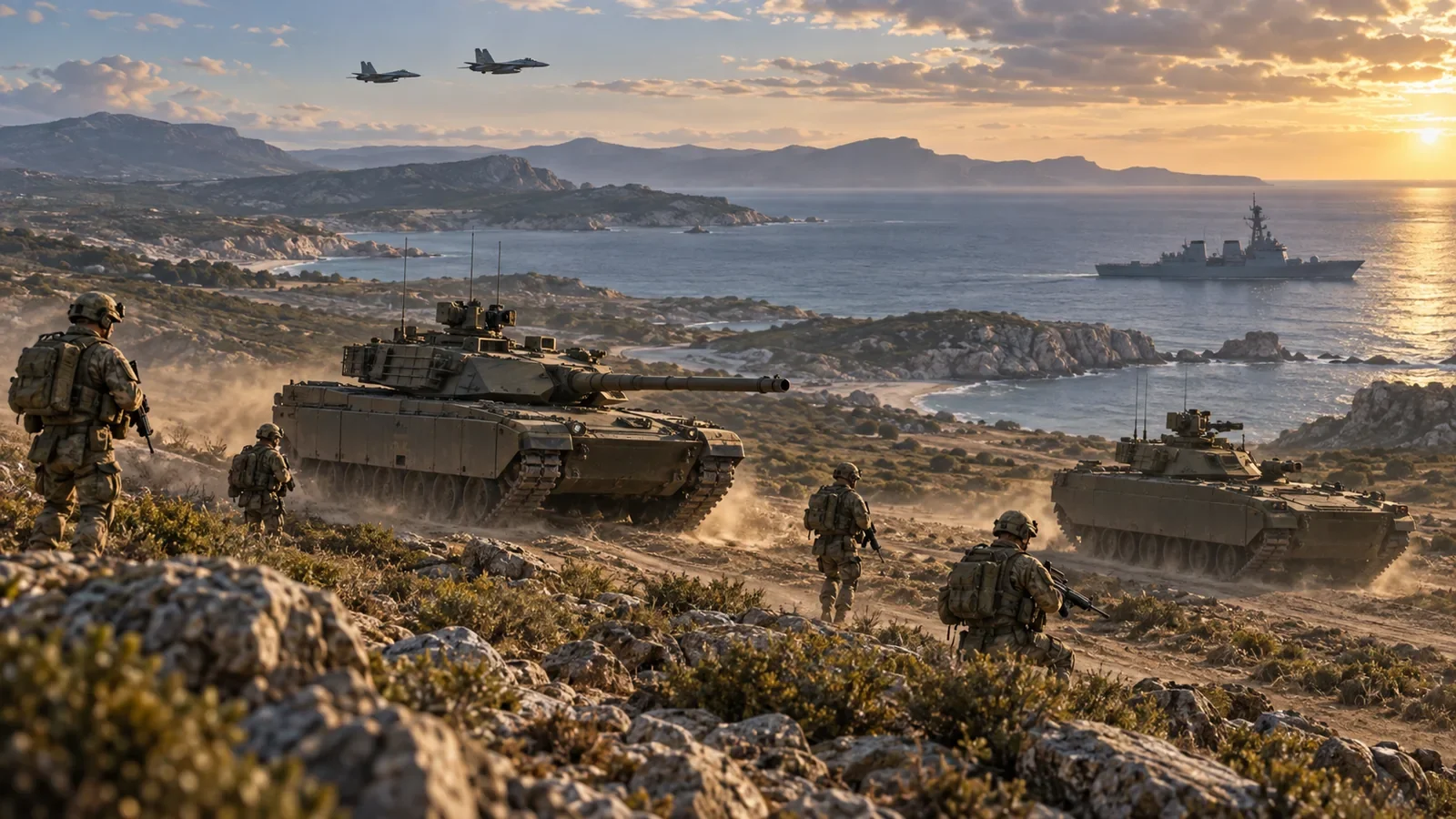
What MPR Does
MPR exists to make military power easier to compare without flattening it into equipment counts. A larger force is not automatically stronger if it lacks readiness, doctrine, logistics, command integration, strategic depth, or the ability to sustain combat under pressure.
Ranks Military Power
The global table compares countries through an MPR score, MPR index, reverse index, and supporting country profiles.
Explains Combat Capability
Country pages connect rank position to doctrine, readiness, geography, logistics, strategic forces, and real-world military role.
Tests Strategic Scenarios
War simulations use rankings, force posture, terrain, escalation pressure, and domain balance to explore possible conflict outcomes.
Publishes Research Trails
MPR links rankings and analysis to public sources, factor explanations, methodology notes, and military education pages.
How MPR Evaluates Power
The MPR model uses 209 factors across force size, weapons systems, naval power, air power, missile defense, logistics, geography, industry, technology, command quality, alliances, and strategic endurance. These capabilities are assessed in the context of a country’s doctrine, force posture and realistic military role.

The lessons of war behind the rankings
MPR developed its factors from the lessons of all the wars in its database of significant conflicts from antiquity through 1945, together with its subsequent study of postwar conflicts. These accounts reveal why formidable armies sometimes fail, why determined defenders can prevail, and why a nation’s ability to endure can matter as much as its capacity to inflict destruction.
Fourteen recurring influences on war outcomes form the foundation of the 209-factor framework. Leadership, logistics, morale, training, geography, technology and the other categories are examined in relation to one another. Ammunition must reach serviceable weapons; trained forces must be able to reach the theater; losses must be absorbed and fighting strength sustained. The assessment concerns the military power a country can actually bring to bear today.
Combining the scientific method with predictive modelling, MPR brings quantitative measurement, qualitative military analysis and regression analysis together in a proprietary, real-valued mathematical function subject to mathematical limits. The MPR Algorithm explains the method, while the Factors page sets out the full catalogue and its fourteen historical categories.
How evidence and military judgment work together
Destruction Power, Destruction Tolerance, Qualitative Superiority and Qualitative Inferiority explain the reasoning behind MPR’s military power equation. They connect usable force with the capacity to endure, the qualities that strengthen a military, and the weaknesses that restrict it. These four components and the fourteen historical categories provide complementary ways to understand the same assessment.
Regression analysis examines relationships between defined factors and war outcomes. Interpretation requires attention to the objectives, circumstances and evidence of the conflicts being compared. The mathematical assessment applies factor weights, normalization and limits; a factor’s place in a category does not itself determine its numerical weight.
Construct validity concerns whether the assessment measures its intended subject: actual warfighting ability today. Reliability concerns consistency of measurement. Public data, estimates and military judgment must therefore be examined with attention to their definitions, dates and uncertainty. The detailed methodology explains these distinctions alongside the scoring stages.
Inside Military Power Rankings
A short guide to MPR’s purpose, approach and research tools.
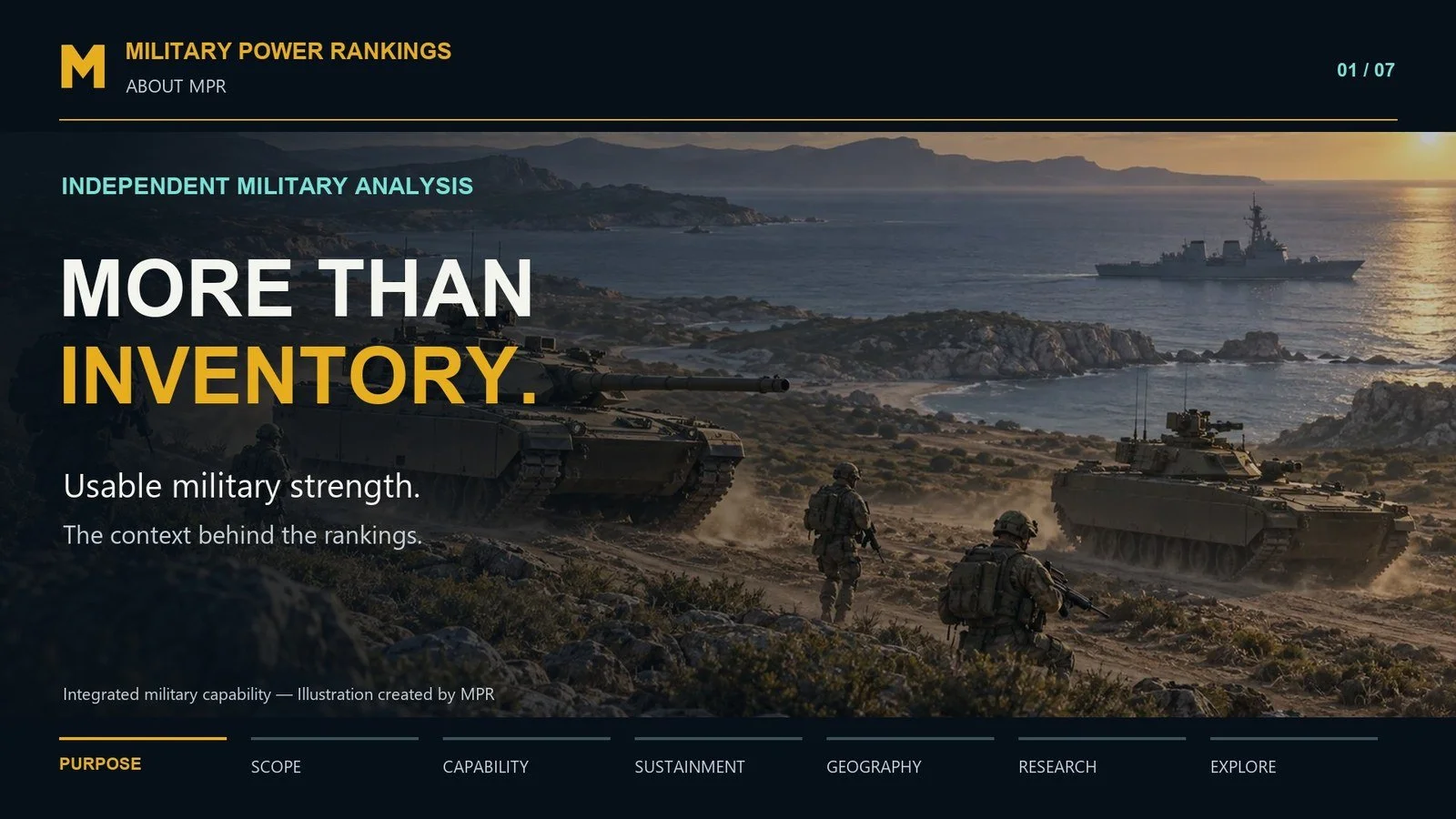 Watch the About MPR guide
If playback does not start, use the player's Play button or open the About MPR guide.
Read the video transcript
Military Power Rankings measures actual warfighting ability today. MPR is an independent analysis project built to compare usable military strength and explain the context behind the rankings.
MPR evaluates 203 militaries using 209 factors, grounded in fourteen recurring lessons from its study of historical and postwar conflicts. Its country profiles, force comparisons, war simulations, and strategic analysis connect those rankings with a broader view of capability.
Readiness, doctrine, and command integration matter. Equipment must be supplied, protected, and used effectively. MPR looks at how forces could perform under conflict conditions.
Logistics connects capability with endurance. Ammunition, fuel, repair capacity, and mobility help determine whether a force can sustain combat under pressure.
Geography matters, too. MPR considers realistic missions, threats, alliances, and strategic depth, rather than assuming every country has the same military role.
MPR does not sell ranking positions. Its rankings are editorial analysis based on public information, comparative judgment, and its methodology. Follow the research trails, and remember that military outcomes are never guaranteed.
Start with the rankings. Explore a country profile. Read the factors, methodology, and sources. Discover MilitaryPowerRankings.com.
Editorial Independence
MPR is not a government agency, defense ministry, military command, lobbying group, or official national ranking system. The site does not sell ranking positions, accept paid placement in the index, or adjust country scores for national advocacy. Rankings are editorial analysis based on public information, comparative judgment, and the MPR methodology.
Editorial Contact
Questions, corrections, source suggestions, or methodology feedback can be sent to mpreditorialboard@gmail.com.
Sources and MPR Method
MPR connects its rankings, country profiles, force comparisons, war simulations, and military analysis to public source material, country-specific research trails, methodology notes, and the 209-factor framework.

What MPR Is Not
Not an official source
MPR is independent analysis. It should not be treated as official defense data, military advice, or government assessment.
Not a prediction guarantee
Military outcomes depend on leadership, timing, escalation, allies, geography, morale, logistics, and political decisions.
Not a simple equipment count
Inventory matters, but MPR weighs whether equipment can be integrated, supplied, protected, and used effectively.
Not a patriotic scoreboard
The goal is comparative clarity. MPR evaluates capability, constraints, resilience, and operational reality.
Explore MPR
Start with the rankings, then follow the methodology, factor list, sources, and country profiles to see how MPR connects military data to combat-focused analysis.