

India vs China War Simulation: Decisive Chinese Victory in the Himalayas
In an MPR Himalayan war model, China enters with the stronger total military score, deeper missile arsenal, more mature multi-domain architecture, superior infrastructure on the Tibetan plateau, and a much stronger war-industrial base. India has manpower and defensive terrain, but those advantages do not offset China's dominance in missiles, ISR, electronic warfare, logistics, air-defense density, and theater-level command integration. The result is a decisive Chinese victory in the Himalayan theater.
Scenario Assumptions
- The conflict begins as a major Line of Actual Control crisis and expands into a limited conventional war.
- No nuclear weapons are used. Both sides keep escalation below strategic nuclear thresholds.
- Pakistan does not formally enter the war, but India must still reserve forces for a potential two-front contingency.
- The first decisive phase is fought in the Himalayas, not in the Indian Ocean or mainland population centers.
- China seeks limited territorial and coercive objectives rather than total conquest of India.
The Himalayan scenario, illustrated
Explore four aspects of the scenario. Select an illustration to read the corresponding assessment. These conceptual scenes illustrate the scenario rather than document a real event.
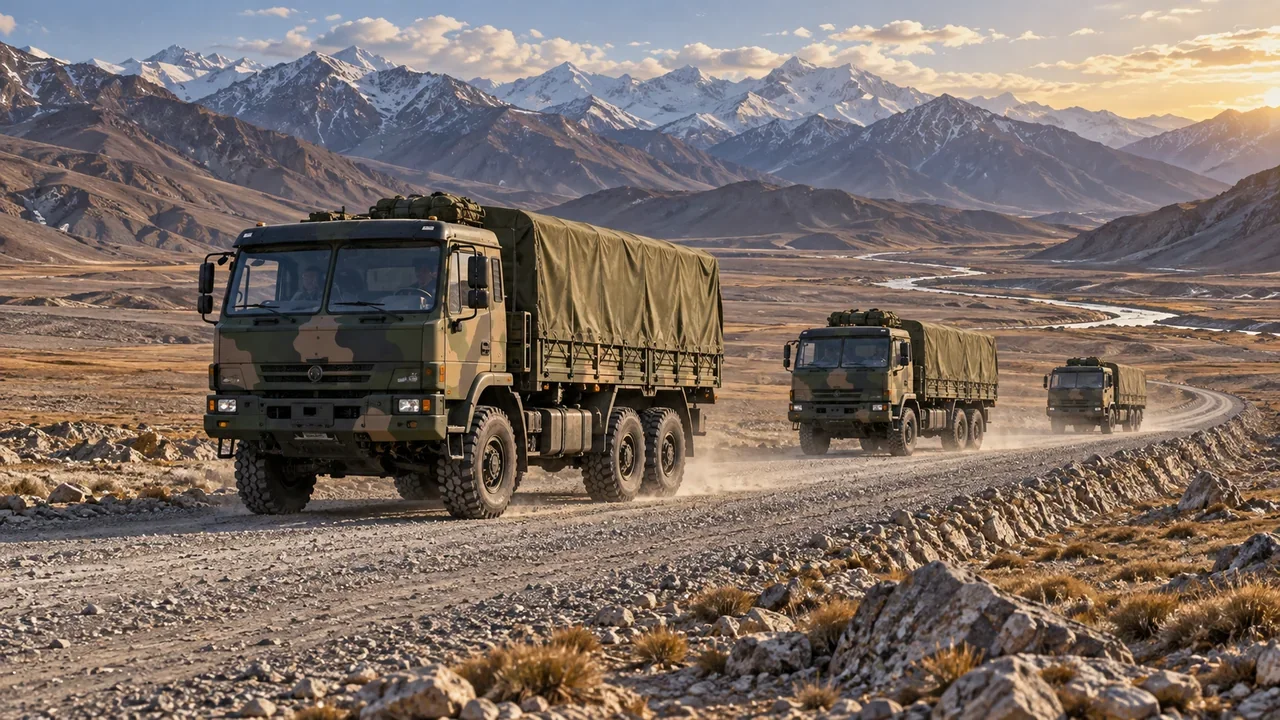 Terrain and Logistics
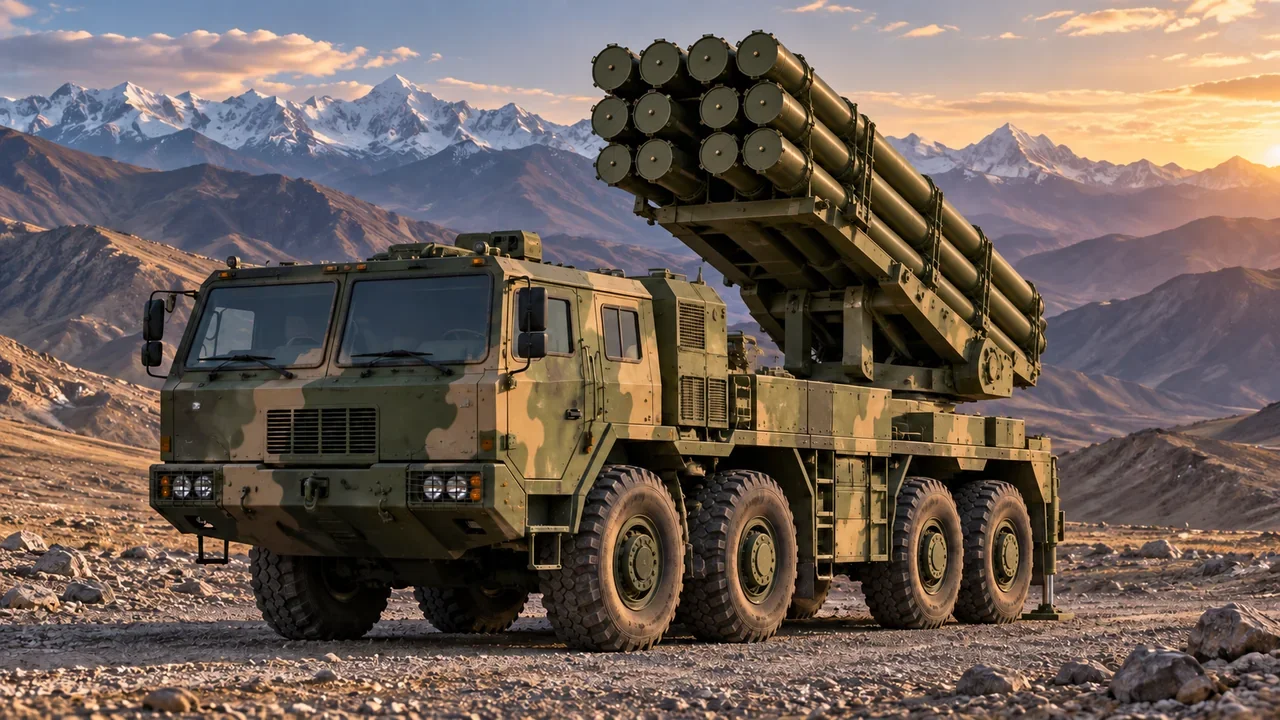 Missiles and Rocket Force
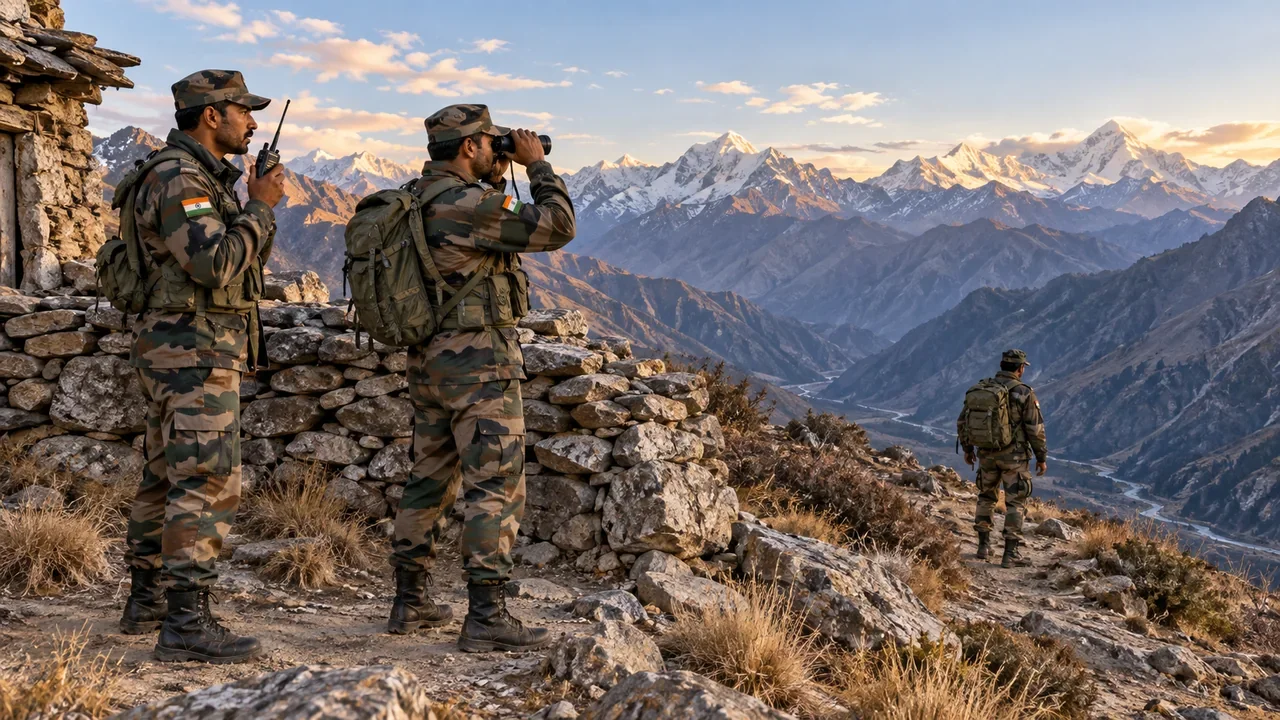 Ground Combat
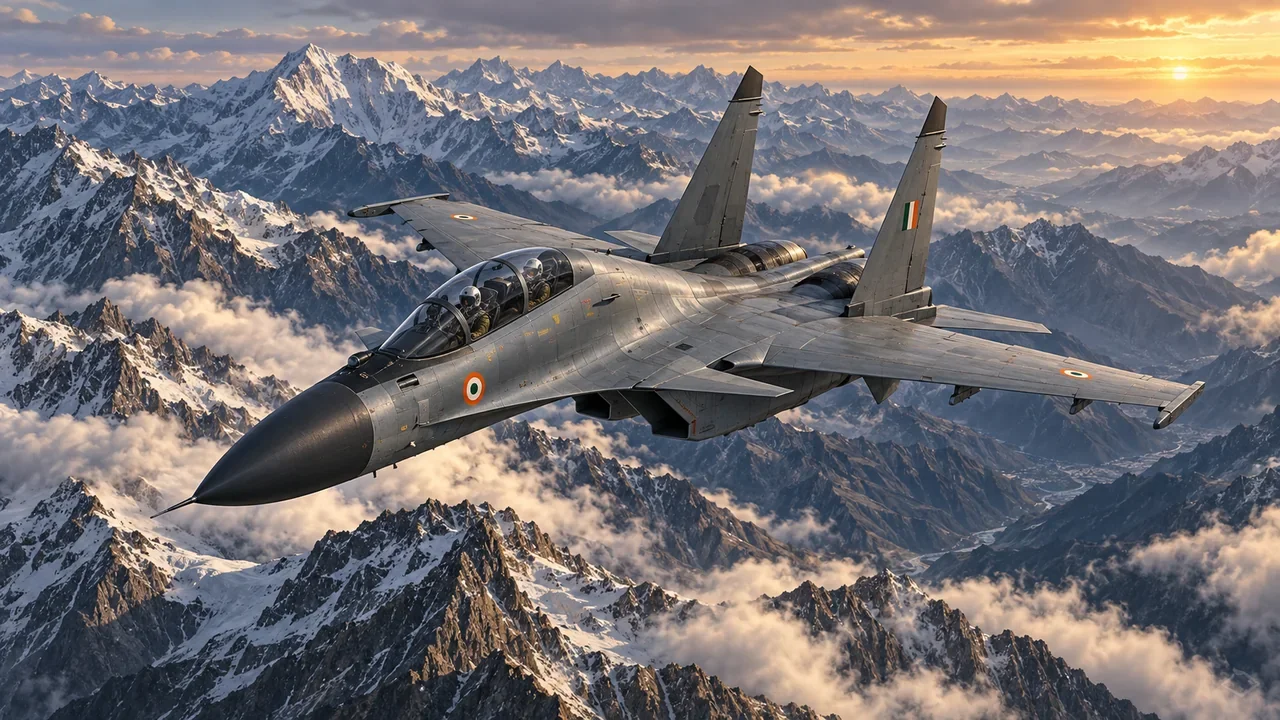 Airpower
Himalayan Theater Map
On narrow screens, scroll horizontally to see the full diagram. Keyboard: focus this panel, then use the left and right arrow keys.Baseline MPR Comparison
On narrow screens, scroll horizontally to see the full table. Keyboard: focus this panel, then use the left and right arrow keys.| Metric | China | India | MPR Interpretation |
|---|---|---|---|
| MPR Rank | #2 | #4 | Both are top-tier powers, but China enters with the stronger overall military system. |
| MPR Score | 2014 | 1460 | China's advantage is not only size; it is integration, industrial depth, missile power, and multi-domain architecture. |
| War-Type Fit | High for limited border coercion | High for defensive endurance | China is better aligned to the actual theater, tempo, and escalation ladder of a Himalayan war. |
| Most Important Theater | Tibet / Western Theater Command | Himalayan defense belts and reserve mobilization | China forces the decisive phase in the mountains before India can shift the contest elsewhere. |
Domain-by-Domain Assessment
Terrain and Logistics
Edge: China in the opening phaseChina's plateau infrastructure, road and rail access into Tibet, and centralized Western Theater Command create a stronger first-move logistics position. India benefits from defensive terrain, but reinforcement from the Indian side must climb into the fight under pressure.
Ground Combat
Edge: ContestedIndia has serious mountain forces, high-altitude experience, and defensive depth. China has the modernization edge, stronger theater integration, and the ability to concentrate limited objectives. In the first campaign, China can isolate exposed sectors; India can punish overextension.
Airpower
Edge: China, but not cleanAltitude, weather, runway vulnerability, and geography make airpower difficult for both sides. India has quality aircraft and experienced pilots; China has greater depth, ISR integration, air defense density, and missile pressure against forward air bases.
Missiles and Rocket Force
Clear Edge: ChinaThis is the decisive Chinese advantage. Long-range fires, theater missiles, airbase suppression, logistics disruption, and command-node pressure allow China to shape the battlefield before ground units make decisive moves.
ISR, Cyber, Space, and EW
Edge: ChinaChina's advantage in space-enabled ISR, electronic warfare, cyber pressure, and networked command allows it to compress decision cycles. India can resist and adapt, but the opening tempo favors the side with stronger multi-domain synchronization.
Indian Ocean and Strategic Expansion
Limited India pressure, not decisiveIndia can threaten maritime costs if the war widens, but that does not decide the Himalayan campaign. China can impose a fait accompli along the Line of Actual Control before Indian Ocean pressure meaningfully changes the battlefield. In this war type, the decisive combat is land, missile, ISR, EW, and logistics in the mountains.
Industrial Endurance
Edge: ChinaChina's defense-industrial scale, drone production, missile inventory, electronics base, and manufacturing depth give it a stronger replenishment curve. India is improving, but its supply base is still more mixed and dependent across key systems.
War-Type Alignment
Opening Edge: China; Long-War Resistance: IndiaChina is better aligned for a limited, fast, prepared, high-altitude campaign. India is better aligned for national resilience, defensive attrition, and expanding pressure outside the exact terrain China wants to dominate.
Campaign Timeline
Phase 1: Border Crisis and Forward Mobilization
Both sides surge forces toward disputed sectors. India reinforces mountain positions; China moves faster across prepared plateau corridors and uses ISR to identify exposed Indian logistics and command nodes.
Phase 2: Missile, EW, and Airbase Pressure
China uses theater fires, electronic warfare, drones, and cyber pressure to disrupt Indian forward airfields, communications, and resupply. India absorbs the blow, but the opening tempo shifts toward China.
Phase 3: Limited Ground Advances
China avoids a broad invasion of India and instead seeks selected terrain, passes, and coercive positions. India holds major defensive belts but loses some exposed forward points under combined missile and ground pressure.
Phase 4: India Stabilizes and Threatens Expansion
India moves reserves and activates deeper defensive lines, but the operational picture has already shifted. China has disrupted forward logistics, degraded command tempo, and taken or dominated key terrain. India's attempt to widen the war comes too late to reverse the Himalayan result.
Phase 5: China Declares Limited Objectives Achieved
The most likely MPR end state is a decisive Chinese theater victory: China seizes or dominates selected terrain, demonstrates escalation superiority in the Himalayas, and then dictates the ceasefire framework from a position of strength.
Outcome Probability Bands
On narrow screens, scroll horizontally to see the full table. Keyboard: focus this panel, then use the left and right arrow keys.| Scenario Window | China Win Probability | India Win / Hold Probability | MPR Reading |
|---|---|---|---|
| First 72 hours | 55-62% | 38-45% | China has the better prepared theater start, but India is not brittle. |
| Days 4-10 | 62-70% | 30-38% | Chinese missile, ISR, and logistics advantages compound against exposed Indian positions. |
| Days 11-30 | 68-76% | 24-32% | China is most likely to lock in a decisive theater victory before India can broaden the war. |
| Longer war / wider theater | 65-75% | 25-35% | Even if the war widens, China retains the advantage because the decisive Himalayan result has already been imposed. |
Final MPR Assessment
China is projected to win the Himalayan war decisively because the war type favors prepared missile-supported coercion from the Tibetan plateau. China's Rocket Force, ISR, cyber and electronic warfare, air-defense depth, drone coverage, logistics corridors, and centralized theater command allow it to shape the fight before India can fully convert manpower into battlefield effect.
India has manpower, courage, and defensive terrain, but those strengths are not enough against China's integrated multi-domain system. The gap is not just numerical; it is systemic. China has the superior missile layer, better theater preparation, stronger industrial base, deeper ISR architecture, and more coherent escalation control. In a Himalayan war, India is outmatched.
Related MPR Pages
Sources and Simulation Method
This India vs China Himalayan scenario is an educational conflict forecast using mountain geography, altitude, logistics, ISR, missile range, air defense, cyber disruption, escalation risk, and MPR ranking context. For the research trail and ranking methodology, review the MPR Sources, MPR Algorithm, and 209 Ranking Factors.