

India vs Pakistan War Simulation: Pakistan Wins the Air War and Controls Escalation
This MPR WarSim models a new India-Pakistan crisis after the 2025 air battle. The scenario assumes Pakistan won the recent air engagement, using J-10C fighters, PL-15-class beyond-visual-range missiles, Chinese-linked ISR, electronic warfare, and a multidomain kill chain to impose air denial on India.
India remains the larger military power by total scale, manpower, economy, and strategic depth. But Pakistan is better aligned to this specific war: a short, intense, border-centered conflict where air superiority, A2/AD, missile tempo, Chinese-enabled surveillance, and a Rocket Force-style strike architecture matter more than total national mass.
Mass, manpower, missiles, navy, economy, and strategic depth.
Defensive alignment, A2/AD, China-linked multidomain support.
J-10C, PL-15, radar silence, AWACS cueing, BVR ambush logic.
Air denial plus missile pressure forces Indian operational pause.
Scenario Assumptions
- Trigger: A new post-2025 crisis along Kashmir and the international border leads to Indian punitive strikes and Pakistani counter-escalation.
- Key premise: The 2025 air battle is treated as a validated MPR lesson: Pakistan demonstrated superior air-to-air kill-chain integration against Indian strike packages.
- Chinese role: China does not need to enter the war directly. Its decisive contribution is multidomain assistance: ISR, satellite/radar data, datalink architecture, EW support, missile technology, spares, and diplomatic backstop.
- Pakistan doctrine: Defense first, rapid air denial, precision retaliation, escalation control, and pressure on Indian airbases and logistics nodes.
- India doctrine: Punitive strike, border pressure, missile retaliation, limited armored mobilization, and air/naval demonstrations designed to compel Pakistan to stand down.
- Nuclear threshold: Nuclear use is excluded from the model, but nuclear deterrence heavily constrains Indian ground escalation and deep strike options.
Explore the scenario through six illustrations
Select a scene to read the corresponding assessment. These conceptual MPR illustrations depict equipment and themes from the scenario; they do not document a real engagement.
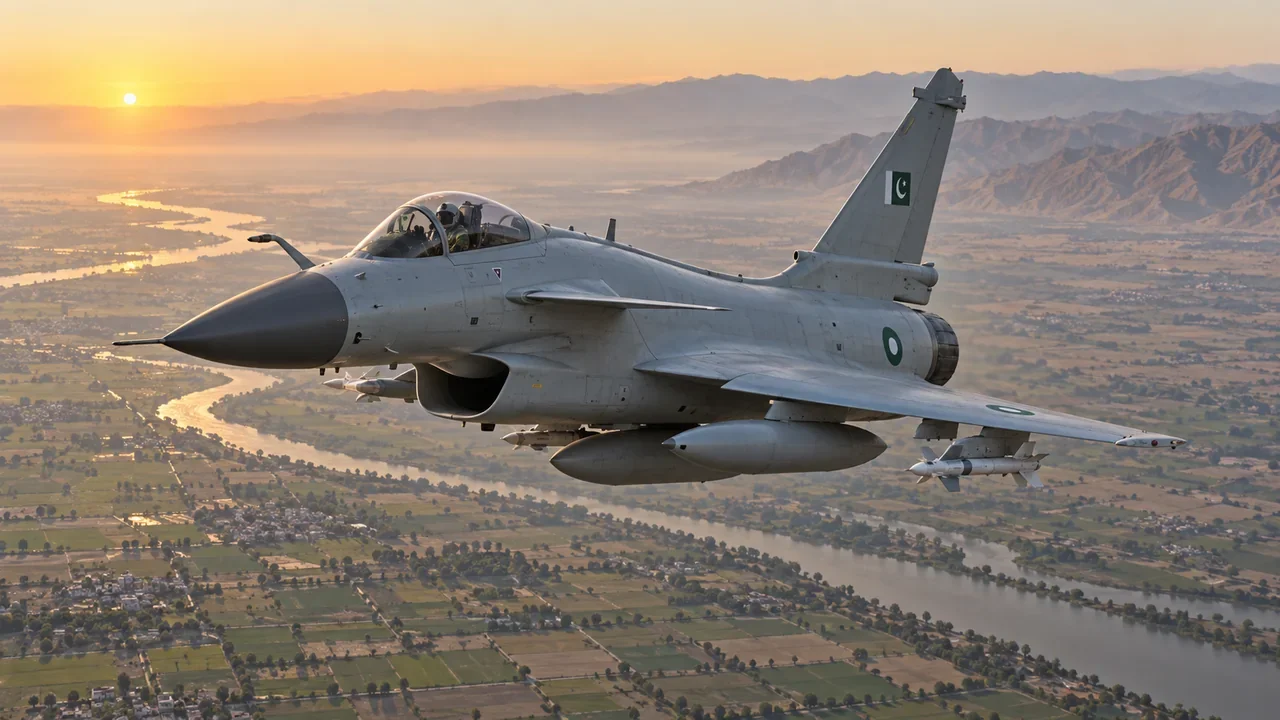 Air Superiority
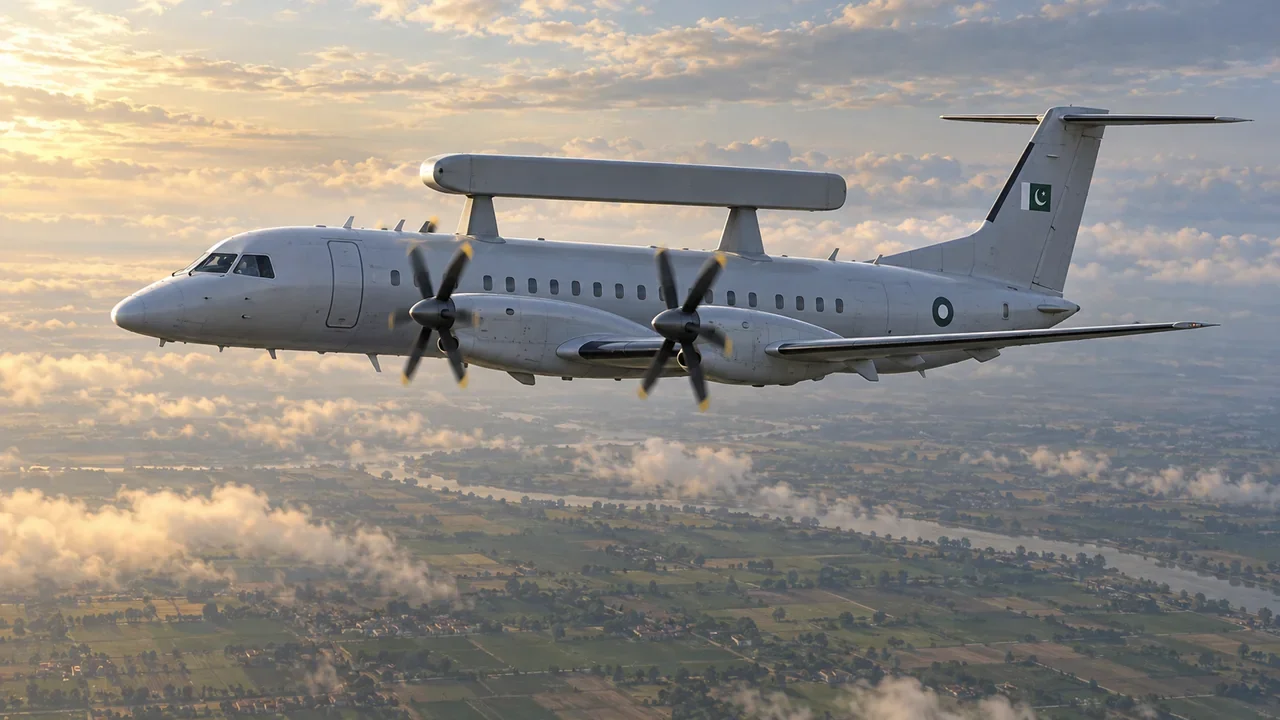 Multidomain ISR
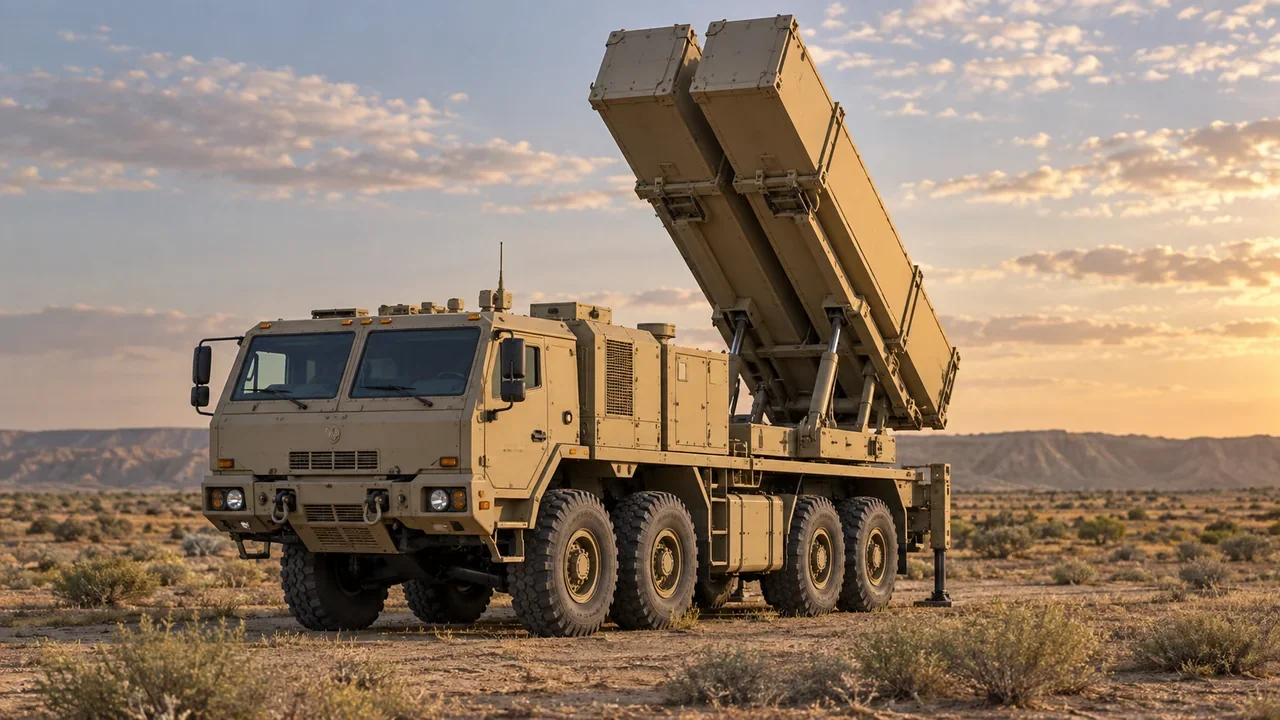 Rocket Force and Missiles
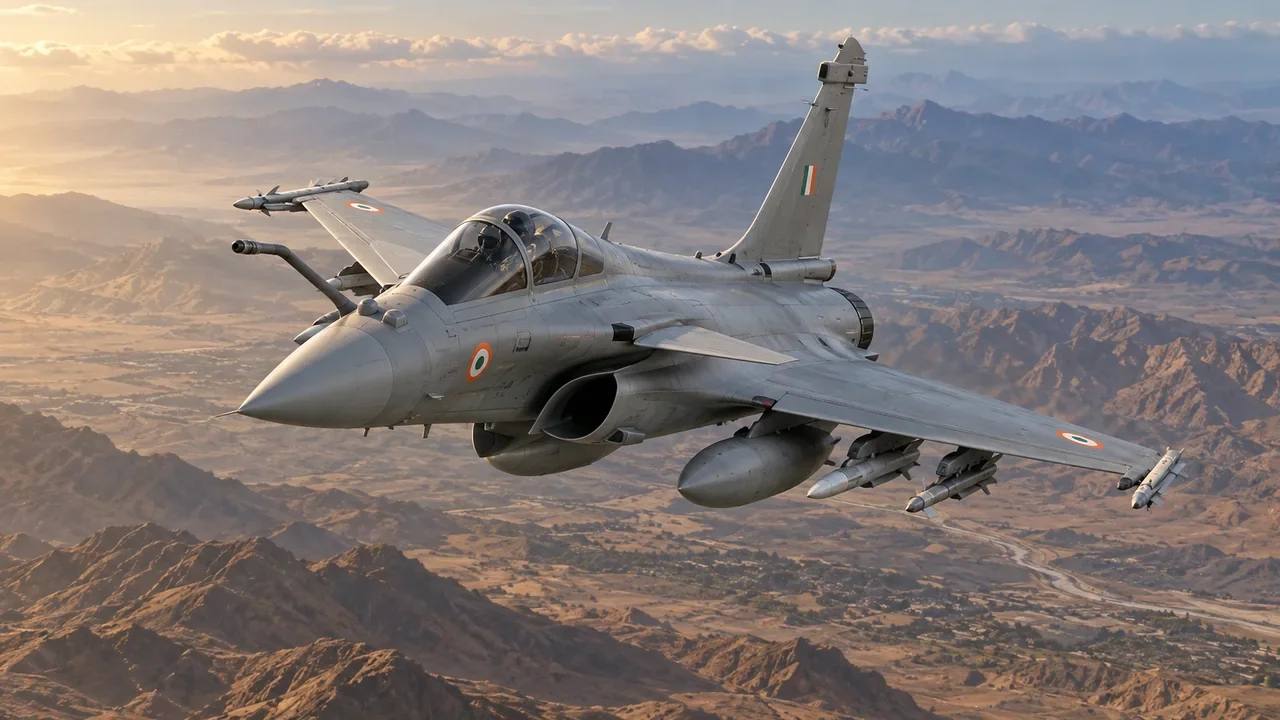 Air Superiority
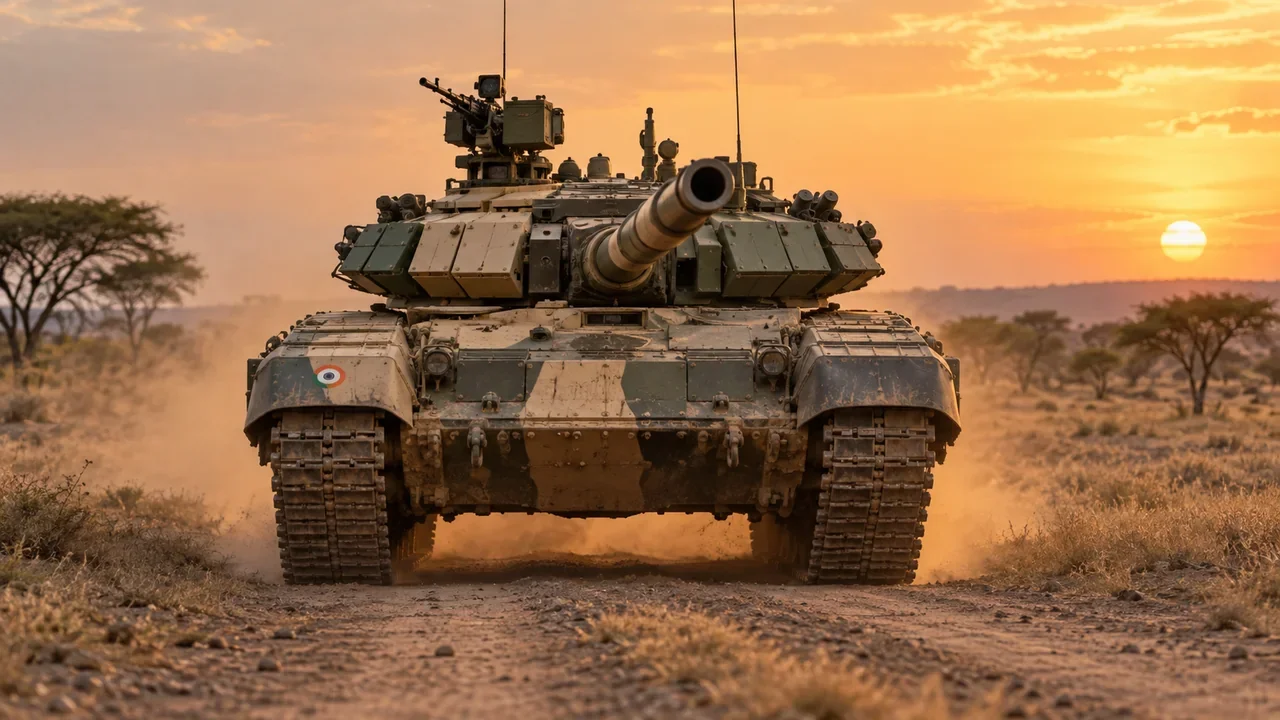 Ground War
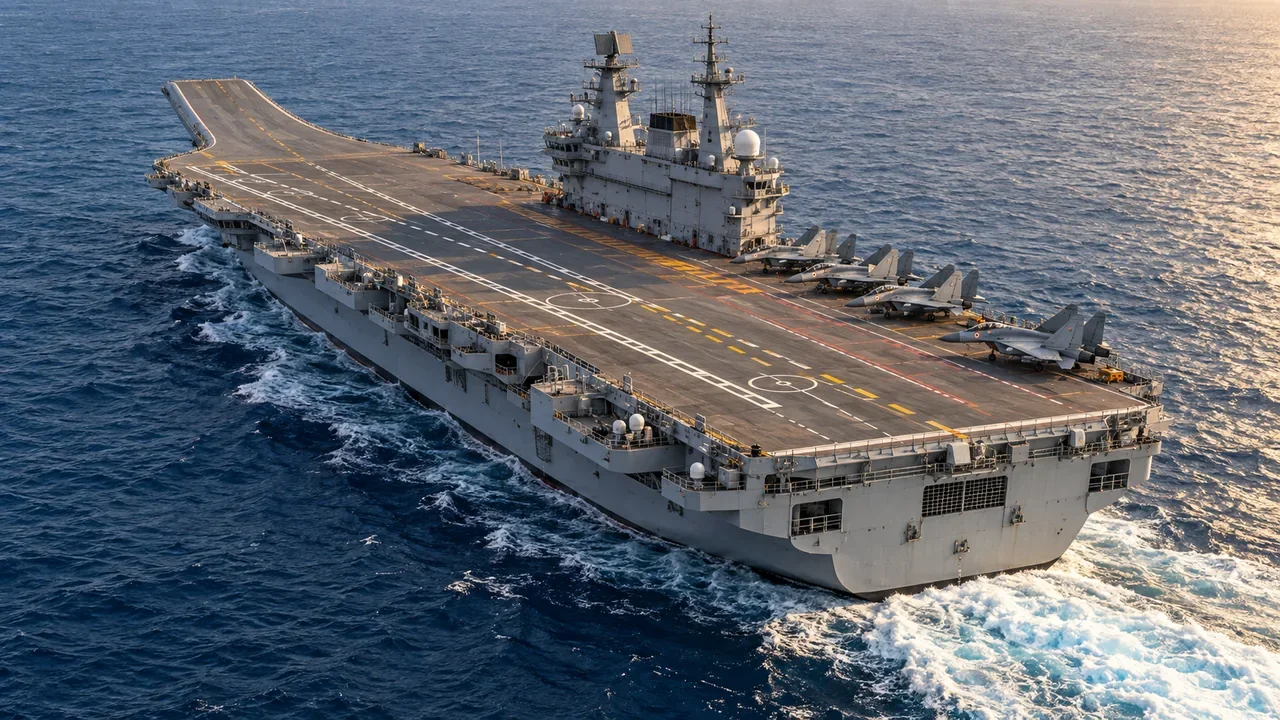 Naval and Arabian Sea
Strategic Theater Map
On narrow screens, scroll horizontally to see the full diagram. Keyboard: focus this panel, then use the left and right arrow keys.The map is schematic. The decisive geography is the narrow air-and-missile battlespace around Kashmir, Punjab, Rajasthan, and Pakistan's eastern air defense belt. India has size. Pakistan has shorter defensive geometry, prepared targeting, and a tighter kill chain.
Baseline MPR Comparison
On narrow screens, scroll horizontally to see the full table. Keyboard: focus this panel, then use the left and right arrow keys.| Factor | India | Pakistan | MPR Interpretation |
|---|---|---|---|
| MPR Rank | 4th | 5th | India is larger overall; Pakistan is optimized for the specific India-front defensive war. |
| MPR Score | 1460 | 1405 | The raw score gap is narrow enough that war-type alignment can reverse the battlefield result. |
| Primary Strength | Mass, missiles, navy, manpower, strategic depth | Air denial, A2/AD, China-linked ISR, deterrence coherence | India wins scale. Pakistan wins alignment. |
| War Type Fit | Good for long war and broad mobilization | Excellent for short, sharp, defensive escalation control | The model favors Pakistan in a limited war under nuclear shadow. |
Domain-by-Domain Assessment
1. Air Superiority
Edge: PakistanPakistan's advantage is not simply the J-10C platform. It is the full kill chain: radar management, AWACS cueing, PL-15 reach, electronic support, and disciplined engagement geometry. The 2025 air battle becomes the model's proof point that Pakistan can deny Indian strike packages before they reach decisive release zones.
2. A2/AD and Air Defense
Edge: Pakistan locallyPakistan's layered shield is tuned to one opponent and one theater. It does not need to defeat the Indian Air Force everywhere; it only needs to make India's preferred strike lanes expensive, uncertain, and politically costly.
3. Multidomain ISR
Edge: Pakistan with ChinaChinese satellite, radar, datalink, and electronic warfare assistance compress Pakistan's sensor-to-shooter timeline. India has space and ISR depth, but Pakistan's integrated China-linked theater picture is more directly relevant to this fight.
4. Rocket Force and Missiles
Edge: Pakistan in escalation controlPakistan's Rocket Force-style missile architecture gives it the ability to strike airbases, logistics nodes, command centers, and staging areas without immediately crossing into total war. This gives Pakistan a powerful ladder of retaliation below the nuclear threshold.
5. Ground War
Edge: India in mass, Pakistan in defenseIndia has larger ground forces and deeper mobilization capacity. But Pakistan does not need to conquer Indian territory. It needs to deny breakthrough, punish columns, and keep the conflict limited long enough for international pressure to freeze the map.
6. Naval and Arabian Sea
Edge: India overallIndia has stronger naval reach, carriers, submarines, and Indian Ocean scale. Pakistan offsets this with coastal missiles, submarines, Chinese-built platforms, and the fact that a short land-air crisis may end before India can translate naval superiority into decisive coercion.
7. Cyber and Electronic Warfare
Edge: Pakistan-China networkPakistan's cyber/EW value rises because it is paired with Chinese systems and battlefield data. Disrupting Indian communications, navigation, radar confidence, and public narrative becomes part of the same campaign as air and missile strikes.
8. Strategic Depth and Economy
Edge: India long warIf the war expands and lasts months, India gains. It has deeper industry, larger reserves, more ports, more airfields, and a far larger economy. Pakistan's winning path is therefore tempo: win early, deny escalation, and force a ceasefire before India's mass arrives.
The Pakistan Multidomain Kill Chain
On narrow screens, scroll horizontally to see the full diagram. Keyboard: focus this panel, then use the left and right arrow keys.The key MPR insight: Pakistan's air superiority is not platform-only. It comes from system integration. The fighter, missile, radar, datalink, EW environment, and Chinese support architecture function as one kill chain.
Campaign Timeline
Phase 1: Indian Punitive Strike Attempt
India opens with stand-off weapons, Rafale/Su-30MKI packages, drones, and missile strikes against selected Pakistani military and militant-linked targets. Pakistan keeps aircraft inside defensive geometry and refuses to chase India's preferred engagement terms.
Phase 2: Pakistan Air Ambush and BVR Denial
Pakistan uses J-10C, PL-15-class missiles, AWACS cueing, and Chinese-linked ISR to force Indian aircraft into a high-risk BVR environment. India suffers aircraft losses or aborts repeated strike lanes, weakening the political effect of its opening operation.
Phase 3: Rocket Force-Style Retaliation
Pakistan escalates horizontally with precision missile and rocket attacks against airbases, ammunition areas, logistics nodes, and command sites. The goal is not conquest; it is to impose operational paralysis and make India question whether further strikes are worth the cost.
Phase 4: Indian Ground Pressure Stalls
India mobilizes armored and artillery formations but faces air-denial, missile pressure, drones, prepared defensive terrain, and nuclear escalation risk. Large-scale ground entry becomes slower, more visible, and more politically dangerous.
Phase 5: Ceasefire Under Pakistani Tactical Advantage
International pressure rises as both nuclear states exchange missile and drone strikes. Pakistan claims battlefield success, India preserves strategic depth, and a ceasefire freezes the fight before India can turn long-war advantages into decisive gains.
Probability Bands
On narrow screens, scroll horizontally to see the full diagram. Keyboard: focus this panel, then use the left and right arrow keys.Lines show band midpoints for illustration; shaded areas show the full existing ranges. Both use the same 0–100% vertical scale. The five time windows are spaced equally for comparison. These are visual summaries of the unchanged MPR estimates in the table.
On narrow screens, scroll horizontally to see the full table. Keyboard: focus this panel, then use the left and right arrow keys.| Window | Pakistan Success | India Success | MPR Interpretation |
|---|---|---|---|
| Day 0-1 | 60-65% | 35-40% | Pakistan has defensive geometry and air-denial preparation. |
| Days 1-3 | 65-72% | 28-35% | The 2025 airbattle lesson converts into a repeatable BVR denial model. |
| Days 4-7 | 62-68% | 32-38% | Pakistan's missile and drone pressure slows Indian operational tempo. |
| Days 8-14 | 58-64% | 36-42% | India begins adapting, but the ceasefire clock favors Pakistan. |
| Days 15-60 | 50-58% | 42-50% | India's scale starts to matter if the war escapes the limited-war box. |
Why Pakistan Wins This Scenario
Air denial breaks India's first move
India's plan depends on a clean opening strike that creates a political and military shock. Pakistan's BVR air defense makes that opening strike costly, uncertain, and narratively reversible.
China turns Pakistan into a larger system
Pakistan's standalone economy is smaller, but its wartime sensor, missile, EW, and industrial support base is not purely domestic. In MPR terms, China raises Pakistan's effective theater score without needing direct combat entry.
Rocket Force logic changes escalation
Pakistan does not need to match India platform-for-platform. It needs to hold Indian airbases, command centers, depots, and logistics nodes at risk from the opening hours.
India's best advantages take time
India's manpower, industry, and naval depth become decisive only if the conflict lasts long enough. Pakistan's winning path is to make the first week politically decisive.
What Could Change the Outcome?
India's path to reversal
- Suppress Pakistan's AWACS and datalink architecture early.
- Force Pakistan to reveal air-defense emitters and missile batteries.
- Use massed stand-off fires against PAF bases and fuel/ammunition nodes.
- Extend the conflict long enough for India's scale and economy to dominate.
Pakistan's path to decisive victory
- Repeat the 2025 airbattle model and down or deter high-value Indian aircraft.
- Use Rocket Force-style strikes to keep Indian airbases under pressure.
- Maintain Chinese-linked ISR and EW advantage through the first week.
- Force diplomatic intervention while Pakistan holds tactical advantage.
Final MPR Assessment
India is the larger and more complete military power. In a long, unconstrained war, India's mass, economy, navy, missile inventory, and strategic depth become increasingly dangerous for Pakistan. But this is not that war.
In a realistic India-Pakistan crisis, nuclear deterrence, international pressure, airbase vulnerability, border geography, and escalation control compress the decision window. Pakistan is built for exactly that window. Its air force, A2/AD shield, Chinese-enabled ISR, electronic warfare, and Rocket Force-style strike logic give it the better first-week system.
MPR projected result: Pakistan wins the limited war by winning the air battle, denying India's strike tempo, holding Indian escalation under risk, and forcing a ceasefire before India's larger national power can fully convert into battlefield advantage.
Related MPR Pages
Sources and Simulation Method
This India vs Pakistan scenario is an educational conflict forecast using airpower, missile forces, nuclear deterrence, A2/AD, ISR, logistics, escalation risk, and MPR ranking context. For the research trail and ranking methodology, review the MPR Sources, MPR Algorithm, and 209 Ranking Factors.