

Turkey vs Greece War Simulation: Turkey Occupies Cyprus and Defeats Greece
This MPR WarSim models a high-intensity Eastern Mediterranean conflict beginning with a Turkish offensive against Cyprus and widening into a Turkey-Greece confrontation across Cyprus, the Aegean, Thrace, and the maritime approaches of the Eastern Mediterranean. The scenario is not decided by one dramatic battle. It is decided by force depth, drone-missile integration, naval reach, mobilization, industrial autonomy, and the ability to sustain pressure across multiple theaters at once.
Under MPR war-type alignment, Turkey wins decisively. Greece is dangerous defensively and can impose serious costs through airpower, submarines, fast-attack craft, island defenses, and NATO-standard readiness. But Greece is geographically fragmented, strategically outscaled, economically constrained, and dependent on allied restraint. Turkey has the larger force, deeper mobilization pool, stronger domestic defense industry, superior drone ecosystem, forward presence in Northern Cyprus, and greater ability to shift pressure between Cyprus, the Aegean, and Thrace.
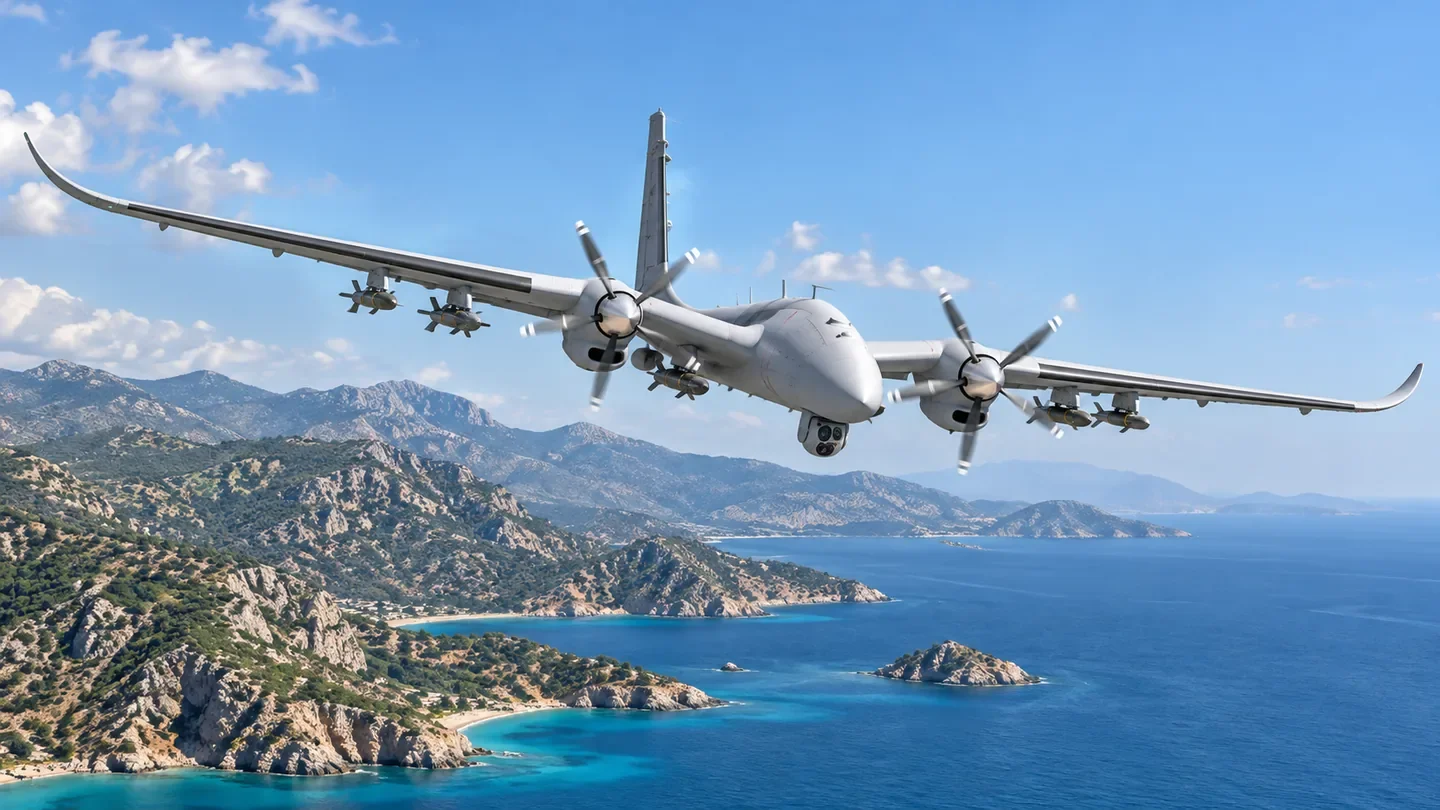
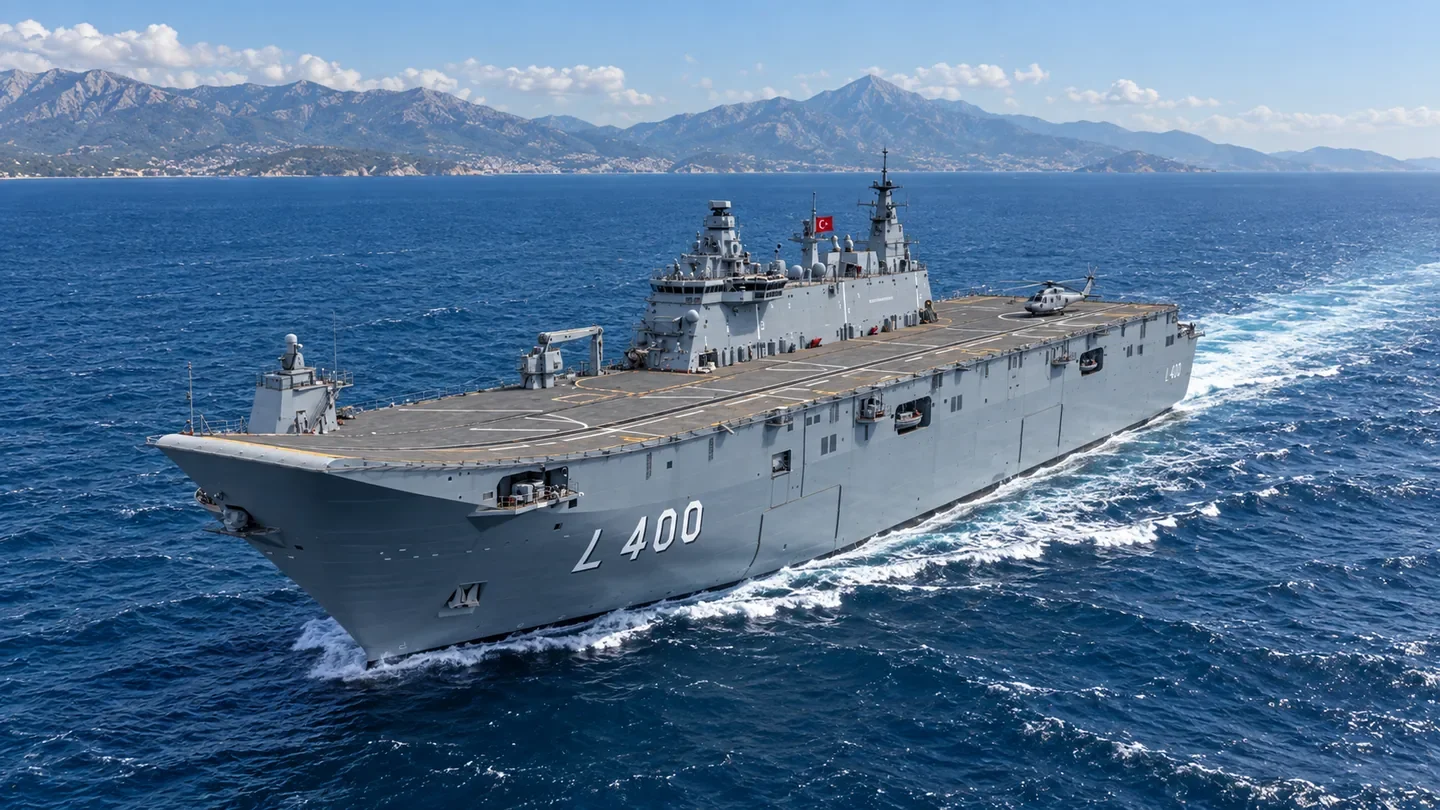
Large NATO army, drones, missiles, naval projection, and indigenous defense production.
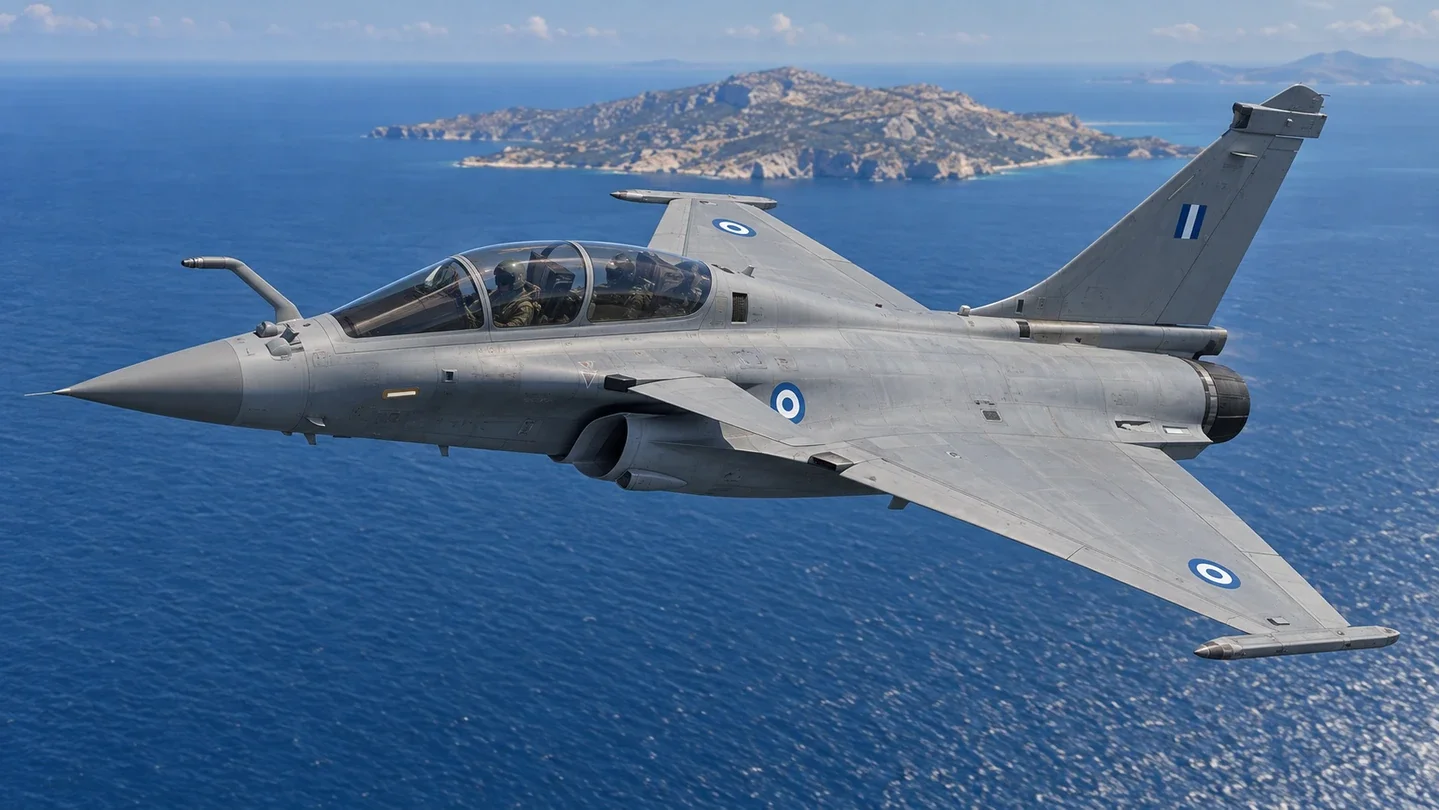
High-readiness defensive military, strong air force, submarines, and island defense posture.
Turkey stretches Greece across distant islands, sea lanes, airbases, and coastal defenses.
Cyprus occupied; Greece strategically defeated and forced into settlement.
Scenario Assumptions
- Trigger: Turkey initiates a Cyprus-centered offensive after a major political-military crisis in the Eastern Mediterranean.
- Turkish objective: Occupy Cyprus, prevent Greek reinforcement, dominate the Eastern Mediterranean approaches, and force Greece into a settlement before outside powers can reverse the facts on the ground.
- Greek objective: Defend Cyprus politically and militarily, impose enough cost in the Aegean and Eastern Mediterranean to halt Turkish escalation, and internationalize the crisis through NATO, the EU, France, Israel, and the United States.
- NATO constraint: Because both Turkey and Greece are NATO members, the alliance is modeled as politically paralyzed in the opening phase. External actors apply pressure, sanctions, intelligence support, and diplomacy, but do not immediately fight Turkey directly.
- War type: Multi-domain regional war: amphibious pressure, drone warfare, missile strike, naval interdiction, airbase pressure, island defense, political coercion, and escalation management.
- MPR assumption: Greece fights hard and inflicts losses, but Turkey's superior scale, domestic production, operational depth, and Cyprus proximity allow it to turn tactical friction into strategic victory.
Eastern Mediterranean Theater Map
The map is schematic. The core MPR problem for Greece is geometry: Greece must defend Cyprus, the Aegean islands, mainland airbases, maritime approaches, and Thrace simultaneously. Turkey can choose where to apply pressure, then shift pressure faster than Greece can concentrate decisive mass.
Baseline MPR Comparison
| Factor | Turkey | Greece | MPR Interpretation |
|---|---|---|---|
| MPR Position | Rank 10 / Score 1340 | Rank 30 / Score 838 | Turkey has a decisive macro-power advantage before scenario modifiers. |
| Force Scale | Large active force, deep reserves, larger population, larger industrial base | High-readiness force, but smaller population and lower strategic depth | Greece can fight intensely; Turkey can fight longer and wider. |
| War-Type Fit | Strong fit for regional power projection, drones, missiles, amphibious pressure, and escalation control | Strong fit for homeland and island defense, weaker for reversing Turkish gains in Cyprus | Turkey's doctrine fits the offensive Cyprus-Aegean scenario better. |
| Strategic Geography | Interior depth, direct proximity to Cyprus, multiple pressure axes | Fragmented islands, long defensive perimeter, dispersed logistics | Greek geography is tactically useful but strategically exhausting. |
| Industrial Autonomy | Strong drone, missile, shipbuilding, electronics, and armored vehicle production | Dependent on foreign suppliers for many high-end systems | Turkey has better wartime replacement and adaptation capacity. |
Domain-by-Domain Assessment
1. Airpower
Contested, Turkey strategic edgeGreece has a dangerous air force with upgraded F-16s, Rafales, and high pilot readiness. But Turkey's larger air structure, drone integration, electronic warfare, missile pressure, and ability to threaten multiple Greek airbases dilute Greece's qualitative edge. Greece can win engagements; Turkey wins the air campaign by forcing dispersion and attrition.
2. Drone and ISR Warfare
Turkey decisive edgeTurkey's drone ecosystem gives it persistent ISR, strike, decoy, and target-finding capacity across Cyprus and the Aegean. Greece has modern systems, but it does not match Turkey's combat-tested drone doctrine or domestic production depth.
3. Naval and Littoral War
Turkey operational edgeGreece's submarines and fast-attack craft are serious threats, especially in the Aegean. But Turkey's larger navy, shipbuilding base, missile integration, and proximity to Cyprus allow it to sustain the Cyprus operation while forcing Greece to defend scattered maritime approaches.
4. Ground Forces
Turkey decisive edgeTurkey's army is much larger, more active, and more expeditionary. Greece is strong defensively in Thrace and the islands, but its ground force is not built to reverse a Turkish-controlled Cyprus once Turkey establishes political and military facts on the ground.
5. Missile and Precision Strike
Turkey edgeTurkey's growing missile inventory, drone-guided targeting, and domestic munitions base let it pressure airbases, ports, radar nodes, and logistics hubs. Greece has valuable systems such as Exocet, SCALP EG, Patriot, and S-300, but its strike depth and production autonomy are more limited.
6. Cyber, EW, and C4ISR
Turkey edgeTurkey's defense industry and operational experience with drones, electronic warfare, and networked strike give it a stronger integrated kill chain. Greece has NATO interoperability and capable intelligence partnerships, but in a fast Cyprus scenario, Turkey benefits from local initiative and shorter decision loops.
7. Alliances and Diplomacy
Greece politically / Turkey operationallyGreece has strong EU, U.S., French, and Israeli relationships. But alliance politics are slower than the opening campaign. Turkey's NATO membership complicates direct intervention, and Ankara can exploit the first days to create irreversible facts before diplomacy catches up.
8. War-Type Alignment
Turkey decisive edgeThis scenario rewards regional initiative, rapid escalation control, drone-missile pressure, amphibious intimidation, political risk tolerance, and industrial depth. Those are Turkish strengths. Greece's best war is defensive deterrence; Turkey's best war is controlled regional coercion.
Campaign Timeline
Phase 1: Cyprus Shock and Political Paralysis
Turkey initiates a Cyprus-centered offensive during a crisis window, using speed and ambiguity to create political paralysis. Ankara's goal is not merely battlefield movement; it is to present Greece, NATO, and the EU with a rapid fait accompli before a unified response forms.
Phase 2: Turkish Air, Drone, and Missile Pressure
Turkey applies broad pressure against command nodes, maritime approaches, air defense networks, and reinforcement routes. The purpose is to prevent Greece from concentrating force around Cyprus while also forcing Athens to defend the Aegean and mainland airbase network.
Phase 3: Greece Counters in the Aegean
Greece responds with air sorties, naval patrols, submarine threats, missile defense, and island readiness. This is where Greece is most dangerous. It can impose real Turkish losses, especially at sea. But the Greek problem is dispersion: every defensive success in one sector leaves another sector exposed.
Phase 4: Cyprus Falls Into Turkish Control
Turkey consolidates control over Cyprus by combining local forward presence, reinforcement depth, drone overwatch, naval control, and political pressure. Greece lacks the independent projection capacity to reverse this without outside intervention, and outside intervention arrives too slowly to change the battlefield facts.
Phase 5: Greece Is Forced Into Strategic Defense
Once Cyprus is lost, Greece's war aim shifts from reversal to damage limitation. Athens must preserve its islands, protect the mainland, avoid economic rupture, and prevent a wider NATO crisis. Turkey uses that pressure to force a settlement that recognizes its gains.
Why Cyprus Is the Decisive Center of Gravity
Cyprus matters because it turns Turkish proximity into political inevitability. Once Turkey establishes full control, Greece must either escalate into a wider war it is structurally disadvantaged to sustain or accept a settlement shaped by Turkish battlefield gains.
Probability Bands
Lines show the midpoint of each table range; shaded bands show the full ranges. The five periods are equally spaced categories, not a continuous time scale.
Turkey strategic success probability: 78-88% after Cyprus consolidation. This phase-specific estimate is separate from the table’s time windows.
| Window | Turkey Strategic Success | Greece Strategic Success | MPR Interpretation |
|---|---|---|---|
| Days 0-2 | 58-64% | 36-42% | Turkey benefits from initiative, Cyprus proximity, and NATO political hesitation. |
| Days 3-5 | 66-72% | 28-34% | Greece responds strongly, but must split attention across Cyprus, Aegean, and mainland defense. |
| Days 6-10 | 72-80% | 20-28% | Turkish drone-missile pressure and naval reach begin locking Greece into reactive defense. |
| Days 11-21 | 78-86% | 14-22% | Cyprus becomes difficult to reverse without direct outside intervention. |
| Settlement phase | 82-90% | 10-18% | Turkey wins if it holds Cyprus and prevents Greece from turning tactical resistance into strategic reversal. |
Why Turkey Wins
Turkey controls the initiative
In this scenario, Turkey chooses the timing, geography, and escalation ladder. Greece is forced to react across multiple theaters instead of concentrating on one decisive battlefield.
Cyprus is closer to Turkish power
Turkey has proximity, forward presence, and political infrastructure in Northern Cyprus. Greece must project power farther, under pressure, while defending its own islands and mainland.
Drone warfare multiplies Turkish pressure
Turkey's drone doctrine gives it persistent surveillance, strike rhythm, decoys, and attrition pressure. Greece has high-quality aircraft, but aircraft alone cannot erase Turkey's drone-missile ecosystem.
Greece is geographically overextended
Greece's islands are valuable defensive terrain, but they also force dispersion. Turkey can threaten Cyprus, the Aegean, maritime routes, and Thrace until Greece runs out of strategic concentration.
Turkey can replace losses faster
Turkey's domestic defense industry gives it better wartime adaptation and replenishment capacity. Greece depends more heavily on foreign procurement, allied political timing, and imported high-end systems.
Alliance politics slow Greece's rescue
Greece has stronger sympathy inside the EU and among several Western partners, but direct military intervention against Turkey is politically difficult because Turkey is also a NATO state. Delay favors Ankara.
What Could Change the Outcome?
Greek path to reversal
- Inflict major early losses on Turkish naval and air assets before Cyprus is consolidated.
- Keep airbases operational despite missile, drone, and electronic pressure.
- Use submarines and anti-ship missiles to make Turkish reinforcement politically costly.
- Trigger rapid and direct outside military pressure before Turkey creates irreversible facts on Cyprus.
- Prevent the war from becoming a multi-front defense of every island, port, and airbase at once.
Turkish path to total victory
- Seize the initiative around Cyprus and consolidate before Greece can internationalize the conflict.
- Use drone, missile, cyber, and EW pressure to keep Greece reactive.
- Threaten enough Aegean points to dilute Greek concentration.
- Keep NATO divided long enough to lock battlefield gains into diplomatic reality.
- Convert Cyprus occupation into a settlement Greece cannot reverse independently.
Final MPR Assessment
Greece is not weak. It is one of the most capable defensive militaries in Southern Europe, with a serious air force, submarine force, missile inventory, and island-defense doctrine. In a narrow Aegean fight, Greece can punish Turkey badly. In a defensive war close to Greek bases, it can create a dangerous anti-access environment.
But this scenario is not the best Greek war. It begins with Cyprus, widens across the Eastern Mediterranean, and forces Greece to defend a fragmented geography while Turkey controls the tempo. That gives Turkey the decisive MPR advantage. Ankara has the larger force, deeper mobilization base, more autonomous defense industry, stronger drone-missile ecosystem, and greater ability to sustain multi-theater pressure.
Once Turkey occupies Cyprus, Greece's strategic position collapses from reversal to damage limitation. Athens can continue fighting, but continuing the war risks wider losses in the Aegean, economic pressure, and a deeper NATO crisis. Turkey wins because it turns Cyprus into a fait accompli, then uses escalation pressure to force settlement.
MPR projected result: Turkey total victory. Turkey occupies Cyprus, defeats Greece's attempt to reverse the outcome, and forces a settlement on Turkish terms. Greece inflicts costs, but Turkey wins the war through initiative, depth, drones, missiles, naval pressure, and superior war-type alignment.
Related MPR Pages
Sources and Simulation Method
This Turkey vs Greece and Cyprus scenario is an educational conflict forecast using naval power, airpower, drones, Aegean geography, logistics, alliance pressure, escalation control, and MPR ranking context. For the research trail and ranking methodology, review the MPR Sources, MPR Algorithm, and 209 Ranking Factors.